A power inverter turns your car into a rolling outlet. That’s useful when you travel, camp, work out of a truck, or ride out a storm with devices that still need juice. The risk is simple: bad power can make good gear act weird, run hot, or shut down.
If you want this gadget to make your life easier, don’t buy the cheapest box with the biggest “peak watts” sticker.
SuperOne 150W- Credit Gannon Burgett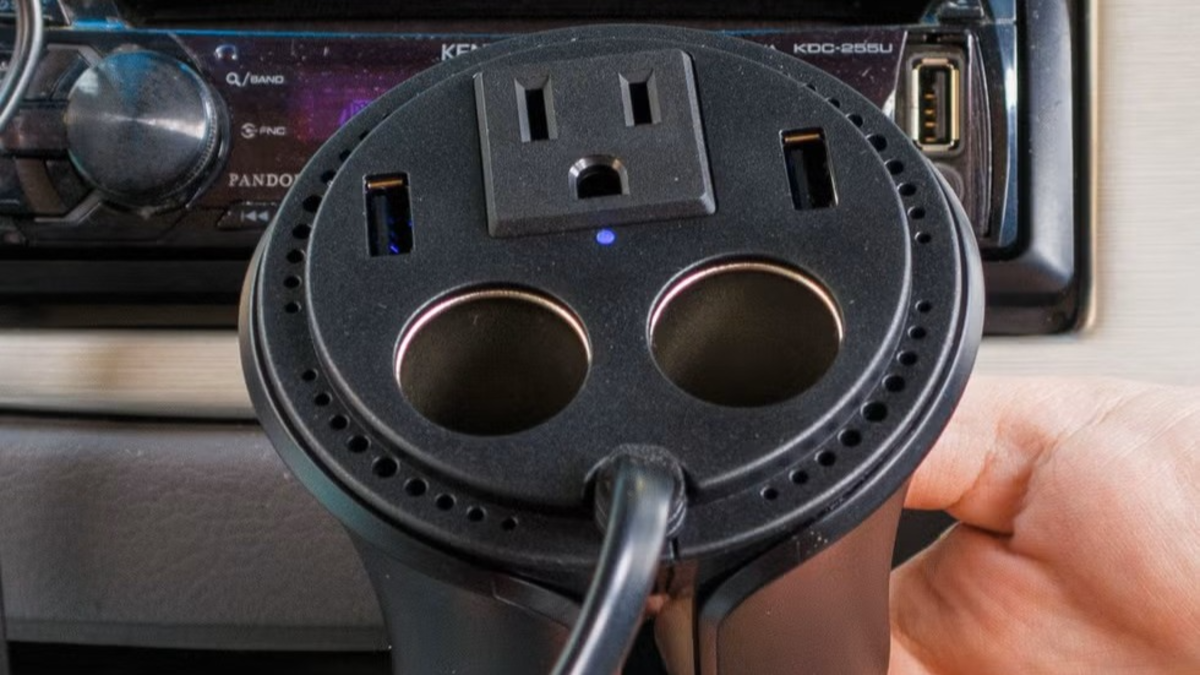
What to Look For So It Runs Clean and Stays Safe
Start with the type of power it makes. Pure sine wave inverters produce a smoother AC output. They play nicer with laptops, camera chargers, CPAP machines, and other picky devices. Modified sine wave units can work for simple loads, but they can cause buzzing, heat, or charger issues with some gear. Renogy’s guide to pure versus modified sine wave inverters explains why this matters in plain terms.
Next, shop by continuous watts. Add up what you will run at the same time, then give yourself a buffer. Peak watts are a short burst. Continuous watts are what you live with. If you plan to run a laptop and a small cooler together, don’t buy a unit that barely clears the math.
Then look at how it connects. A small inverter that plugs into a 12V socket is limited by that socket’s fuse. For higher power, you need direct-to-battery wiring and a fuse close to the battery. If you don’t know how to do that safely, get help. Guessing with high current is how wires melt.
Also, treat safety testing as a clue that a company took this seriously. UL’s inverter certification overview isn’t written for car campers, but it shows what proper evaluation focuses on: electrical safety, fire risk, and performance under load.
Finally, keep it cool. Inverters make heat. Give it airflow. Don’t bury it under a seat and then act surprised when it shuts down.
For a second quick explanation of why pure sine wave tends to be safer for sensitive gear, Go Power’s note on pure vs. modified sine wave inverters is easy to follow.
My Verdict
If you power anything more valuable than a phone charger, buy a pure sine wave inverter with enough continuous wattage and install it properly. You’ll get clean power, fewer weird glitches, and less worry every time you plug in.