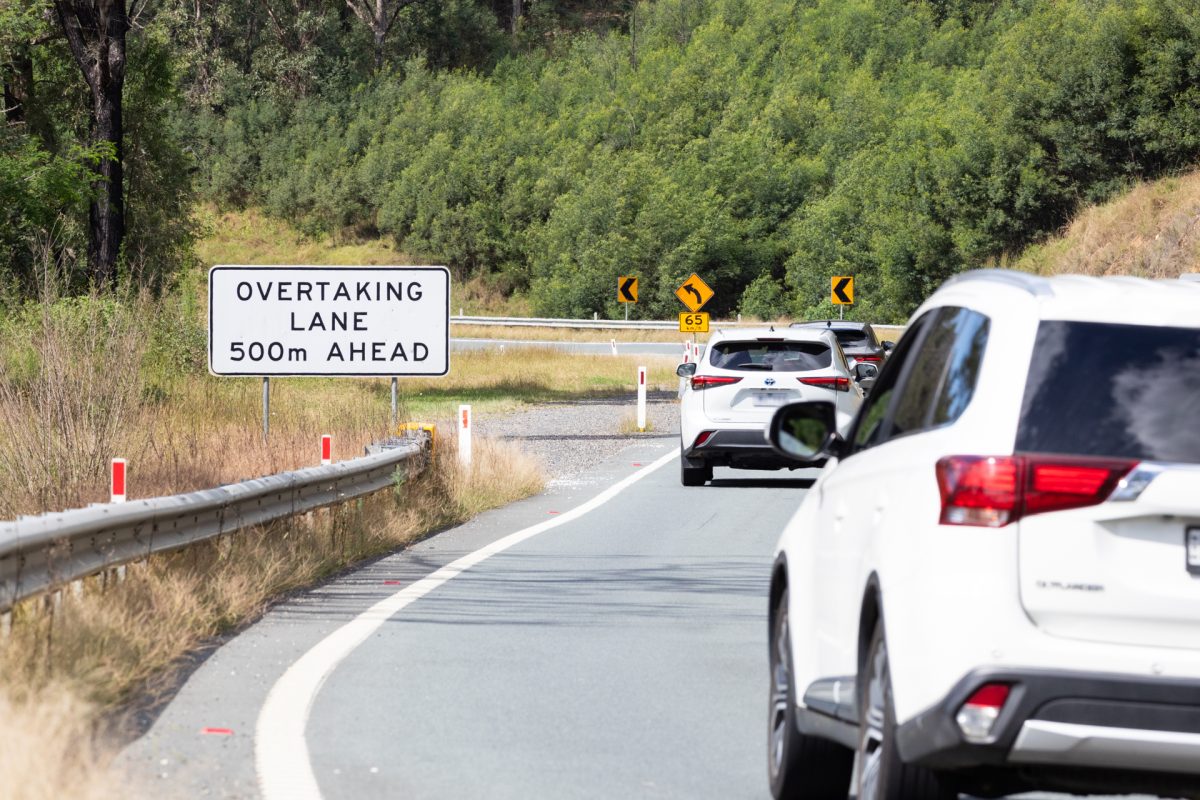
Queanbeyan Council is re-examining a policy around how it looks after unsealed roads, including its maintenance schedule. Photo: Michelle Kroll.
One regional council is hitting the road with a second version of a policy guiding its upkeep of unsealed roads.
Queanbeyan-Palerang Regional Council (QPRC) has to manage a significant length of unsealed public roads, with one council estimate totalling more than 1900 km of roads.
The draft Unsealed Council Road Policy was first put out for feedback last year, after councillors endorsed an earlier draft of the document.
During a meeting in late 2025, councillors unanimously voted to delay its adoption as councillor Bill Waterhouse moved an amendment.
The meeting papers had recommended that they note the public’s submissions and adopt the policy.
In his motion, he called on the council to instead run another round of consultation.
“I know nine people passed it last time, but I think there was even reticence then,” he told the meeting.
“Everyone knew that was going out for community [consultation], and that the community was going to come back and revise it, and that’s what they’ve done.”
It means that people can currently have their say on an amended version of the policy.
READ ALSO: It’s a keeper: Goulburn Council backflips on proposal to sell ‘underutilised’ park
Cr Waterhouse said it was key QPRC made sure the document (including its legal obligations) was easily understood by residents.
“Maintenance is pretty well anything – from a shovelful of gravel into a pothole through to a really sophisticated grading.
“It’s not upgrading. It’s not making the road better or wider or thicker … and we’ve also got to be clear on what the road is like.”
Under the amended version of the policy, the removal of a ‘Category 10’ designation for some roads remains.
However, there are several changes around the terminology used for the roads themselves.
During the meeting, councillor Mareeta Grundy described these amendments as “a significant shift in the policy essence” and suggested introducing a framework to help guide staff decisions around road upkeep.
“This revised draft policy has redefined ‘unmaintained roads’ as ‘unscheduled roads’, avoiding the use of the word maintain [or] maintenance altogether.
“What has replaced it is ‘unscheduled’, and that in itself, suggests ad hoc or reactive maintenance.”
The updated policy clarifies that proposed minimum construction standards would only apply to new or non-council roads that are being considered for addition to the scheduled road network.
It also acknowledges that some roads are still servicable, despite not meeting that criteria.
A distinction between ‘planned maintenance’ and ‘reactive maintenance’ is made.
“For the avoidance of doubt, unscheduled roads will not have planned maintenance roadwork routinely carried out, however may have reactive maintenance roadwork undertaken at the discretion of council following condition assessment inspections and/or reports by the public,” the updated policy states.
READ ALSO: Should we beware of ‘Murrumbidgee Mud Sharks’ this summer?
QPRC meeting documents state that the changes were made following feedback that the initial policy gave council staff too much power to determine road categories (which would have a flow-on effect for their maintenance schedule).
“The revised policy clarifies that reactive works are based on inspection and risk assessment, and that any change of three or more categories requires a council resolution, strengthening governance and oversight,” the document states.
While commentators also raised fears the policy risked the council abandoning its legal obligations towards roads, the papers state “minor edits” were made to ensure it aligned with legislative requirements.
You can have your say on the revised policy until 28 February. The draft policy is available on the YourVoice QPRC website.