A strong geomagnetic storm could bring the northern lights to a skyline near you tonight, January 20, according to space weather experts.
According to the National Oceanic and Atmospheric Administration’s Space Weather Prediction Center and the U.K.’s Met Office (via ABC News), a Coronal Mass Ejection (CME) from Sunday is expected to be visible from Earth today.
To take the “explain it like I’m five” approach, a CME occurs when solar material and magnetic field bursts from the sun’s atmosphere. Think of the sun as a hot pan of soup boiling. Occasionally, a bubble will burst, and its soupy materials will launch into our own atmosphere.
This, in turn, is what creates the conditions for a geomagnetic storm. The effects of the CME create a geomagnetic storm when it hits the Earth’s force, creating a kind of shake that lights up our skies. This is known as aurora borealis, but is often referred to as the Northern Lights.
The U.S. Could See the Nothern Lights Much Farther South Than Usual Tonight — Here’s Where You Can Catch the Best Glimpse
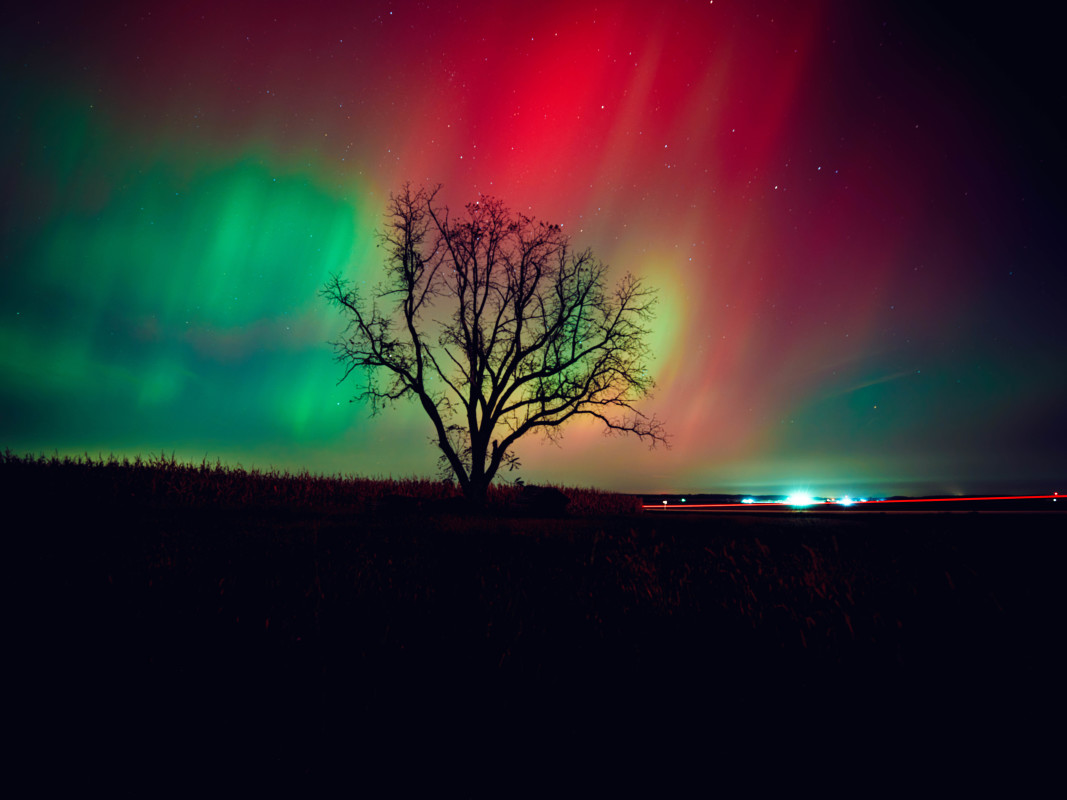
In the United States, the aurora borealis is set to be visible from New York to Washington State. Unusually for the Northern Lights, they may appear as far south as Alabama to Northern California.
David Roth, a meteorologist with the Weather Prediction Center, told the New York Timesthat “at least half of the lower 48 should be able to see [the Northern Lights].” Roth also added that the clearest viewpoints should be in “Nevada, Utah, most of Colorado, Kansas, Southern Missouri, Tennessee, Kentucky, Southwest Virginia, Alabama, and Florida.”
For international readers, the Northern Lights are also expected to be visible in Scotland, Northern Ireland, and the North of England — although those farther south in England have a chance of getting a glimpse, too. New Zealand and Australia may also be treated to some spectacular sights, but the longer days in the Southern Hemisphere occurring at the moment may limit this exposure.
If you’re keen to check out the phenomenon, it is best to get as far away from city lights as possible, as they often obscure the view. Calm, cloudless skies are ideal for getting the clearest view possible. It is best to look to the skies just before sunset or sunrise.