Certain home maintenance tasks, like fixing a loose light switch, flushing your water heater, and tuning up your garage door springs, don’t require you to hire a professional—you just have to have a little know-how to handle it yourself. If you’re dealing with low water pressure in a kitchen or bathroom faucet, you don’t necessarily need to call in a plumber for help. Often you can fix the issue in minutes with just a few basic hand tools. We sought out help from Robert Mazzacone, president and master plumber at Mazzacone Plumbing & Heating in Ossining, NY, for help with how to fix a slow faucet.
How to Fix a Slow Faucet
Slow faucets are typically caused by one of three plumbing issues, Mazzacone says. “The most common cause is the aerator having sediment buildup,” he says. “I also see kinks in the supply line hoses underneath the faucet, cartridge/stems issues, and problems with the shut-off valve feeding the faucet.” Start with the easiest fix first.
How to Fix a Clogged Aerator
The aerator attaches to the opening on the faucet. It adds air to the water, creating a steady stream of water while helping to reduce water consumption, making your water use more efficient. This small disk-shaped piece has mesh that removes sediment from the water as it passes through. Over time the aerator becomes clogged with sediment, slowing the flow of water.
- Start by removing the aerator. For many faucets, you can simply unscrew the end of the faucet by turning it counter clockwise. “If it’s an older faucet it might be a little stuck so you will need to use a strap wrench to remove it to avoid scratching the finish,” Mazzacone says. You can also use an adjustable wrench.
If your faucet doesn’t have a tip that you can unscrew, you’ll need to use a special “key” to remove the aerator. Faucet brands make aerator keys that fit into the grooves in the aerator disk. Moen, Kohler, Delta and other brands have keys designed to fit their specific aerators, so you’ll need to buy one that matches your faucet brand. You can also find multi-keys that fit the major brands. Once you have the right key, stick it into the aerator, so that it fits into the grooves of the faucet tip, then turn it counter clockwise to unscrew the aerator.
- Once you remove the aerator, turn the faucet on. “If there is more flow with it removed, then you found your issue,” Mazzacone says. “If you have no improvement, I would then look for kinks in the hoses underneath the faucet (see below).”
- Rinse the aerator out under the faucet. “If there is buildup that won’t come out, soak it in vinegar or just replace the aerator with a replacement that you buy from a supply house,” Mazzacone says. You can find a pack of faucet aerator disks sold with their compatible plastic key for less than $10.
Related: Your Fridge Water Dispenser Is Grosser Than You Think. Here’s How to Actually Get It Clean
Check the Supply Lines
Sometimes the supply lines can kink or shut-off valves can get knocked closed if there are cleaning products and other supplies pushing up against them.
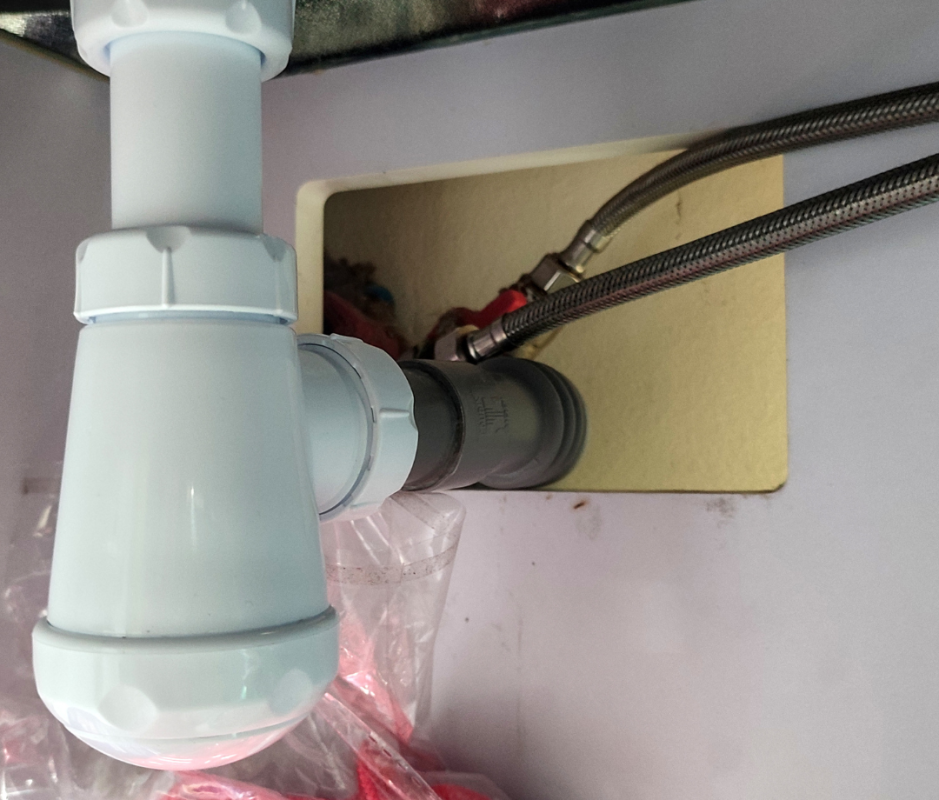
- Open the sink cabinet and check the two supply lines running from the underside of the faucet down to the hot and cold shut-off valves. Make sure the hoses are running from faucet to valves with no kinks in the lines.
- Next, check the shut-off valve of each line to see if it’s been knocked closed. Turn each valve completely counterclockwise to ensure it’s fully open.
Getty Images
How to Flush a Sink’s Supply Lines
If the clog isn’t in the aerator and the supply lines aren’t kinked, there could be sediment blocking one or both lines. Try flushing the lines to clear any blockages.
- Use an adjustable wrench to loosen the nut attaching each supply line to the faucet.
- Hold the hot water line in a bucket then turn on the shut-off valve briefly to run water into the bucket.
- Repeat with the cold water line then reattach both supply lines to the faucet and check the water pressure.
How to Backwash a Sink’s Supply Lines
If you’re having trouble removing a clog in the supply line, you can also attempt to backwash it.
- Disconnect the hot water supply line from the shut-off valve and place one end in a bucket.
- Open the shut-off valve on the cold water side.
- Open the faucet. The water from the cold supply line will run through the faucet and out the hot water supply line, clearing any debris that might be stuck in the line.
- Repeat this process with the other line.
- If all your efforts to clear the lines fail, head to your local home improvement store to purchase new faucet supply lines.
Check the Faucet Cartridge
If you’ve checked the aerator and supply lines and you’re still experiencing low water pressure, then the issue may be with the faucet cartridge. The faucet cartridge, which is located in the faucet handle (or handles if there are two), controls temperature by regulating the mix of hot and cold water as it flows from the supply lines. Sometimes the cartridge can become clogged with sediment, slowing the flow of water.
- Turn off the water supply lines and drain the lines by opening the tap. Remove the decorative faucet handles by loosening the handle screw with a hex wrench.
- Unscrew the faucet cartridge using an adjustable wrench. Remove the retaining clip with a pair of needle nose pliers and lift out the cartridge.
- Check the cartridge for cracks or debris. If you’re not sure if the cartridge is bad, you can run a simple test. Place a towel over the open faucet and briefly turn on the water supply line. If water shoots out of the faucet, then the water pressure is fine and the problem is the cartridge.
- Try soaking the cartridge in a 50/50 mix of white vinegar and warm water overnight to dissolve any deposits. Rinse it thoroughly and reinstall it.
- If the cartridge is hopelessly clogged, you’ll need to replace it.
When to Call a Professional
If the above efforts fail or if the water pressure issue in your home is affecting more than one faucet, then you’ll need to call in a plumber for help. “If you have multiple fixtures that are all flowing slow, your issue is likely bigger, and you should call a professional,” Mazzacone says.