Men’s Journal aims to feature only the best products and services. If you buy something via one of our links, we may earn a commission.
Skiing without goggles is like driving without a windshield—uncomfortable and dangerous. Price tags on the best ski goggles (usually $150 and up) may make you want to try anyway, but we don’t advise it. Any modern ski goggle from a name brand manufacturer will do the job, but your budget, skiing style, and aesthetic preferences will help you narrow things down.
To assist, we’ve shared our favorites in four important categories below, our overall pick though are Zeal Cloudfall Automatic+ Goggles, which rarely fog and have a secure, but easy-to-switch lens system. Read on for the best anti-fogging option, most inexpensive pick, and the best sunglasses.
Looking for more exhaustive reviews on other great snow gear? Check out the rest of Men’s Journal 2025-2026 Ski Awards, where we’ve tested everything from outerwear to après-ski gear to bring you the best of every category—skis, gloves, boots, and more.
Best 4 Ski Goggles and Sunglasses at a Glance
- Best Ski Goggles Overall: Zeal Cloudfall Automatic+
- Best Ski Goggles for Lens Swapping: Smith I/O Mag with Chromapop Pro Lens
- Best Fog-Free Ski Goggles: Glade Adapt 2
- Best Glacier Glasses: Vallon Heron Glacier Glasses
Best 4 Ski Goggles and Sunglasses of 2025-26
Best Ski Goggles Overall: Zeal Cloudfall Automatic+

Courtesy Image
Zeal’s spherical Cloudfall goggle paired with their photochromic Automatic+ lens is their highest-end goggle and one of the best I’ve ever tested. Like any high-end spherical goggle, the Zeal Observation Deck Technology gives a massive field of view and, on my face at least, the frame made only minimal intrusions. In my testing, the high-volume Cloudfalls rarely fogged and if they did, cleared quickly.
In addition to the photochromic lens, you get a low-light option such as Rose. Most photochromics do reasonably well in low light, but a yellow, rose, clear, or other high-transmission lens will always be better for storm days or night skiing. Switching lenses is straightforward once you get the hang of the Rail Lock system. While not quite as dummy-proof as purely magnetic systems, the Rail Lock combo of a secure slot and magnets avoids any moving parts which could fail but adds a layer of security. Most magnet systems work great, but I have seen magnetic lenses explode off their frames in crashes more than once.
I wouldn’t call the fit of the Cloudfall oversized—more medium, and they offer a Cloudfall XL if you need to go big—but for smaller faces, the new Meridian offers a small-to-medium fit that still has great field of vision in a more compact package. The lens tech and features are the same as the Cloudfall but it’s a cylindrical lens and a smaller frame for smaller faces.
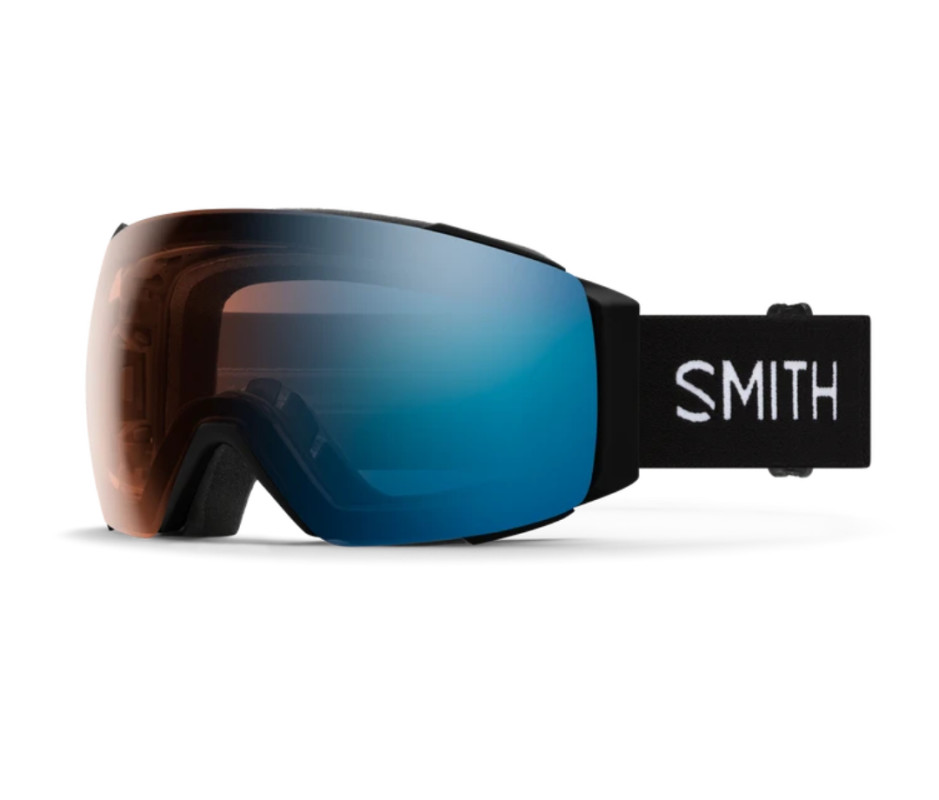
Best Ski Goggles for Lens Swapping: Smith I/O Mag with Chromapop Pro Lens
Courtesy Image
These are a close runner-up to my top overall pick and provide a similar construction and quality to the Zeal Cloudfall, I just personally prefer the fit and change mechanism of the Zeals. Your face may vary, however, and the Smith’s I/O goggle has been one of the most popular ski goggles on the market for a long time for good reason. The magnetic lens change system is rock-solid and one of the easiest to use and the lens quality is high. The inclusion of a photochromic version of the Chromapop primary lens along with a low-light option gives you good value for the fairly high price tag.
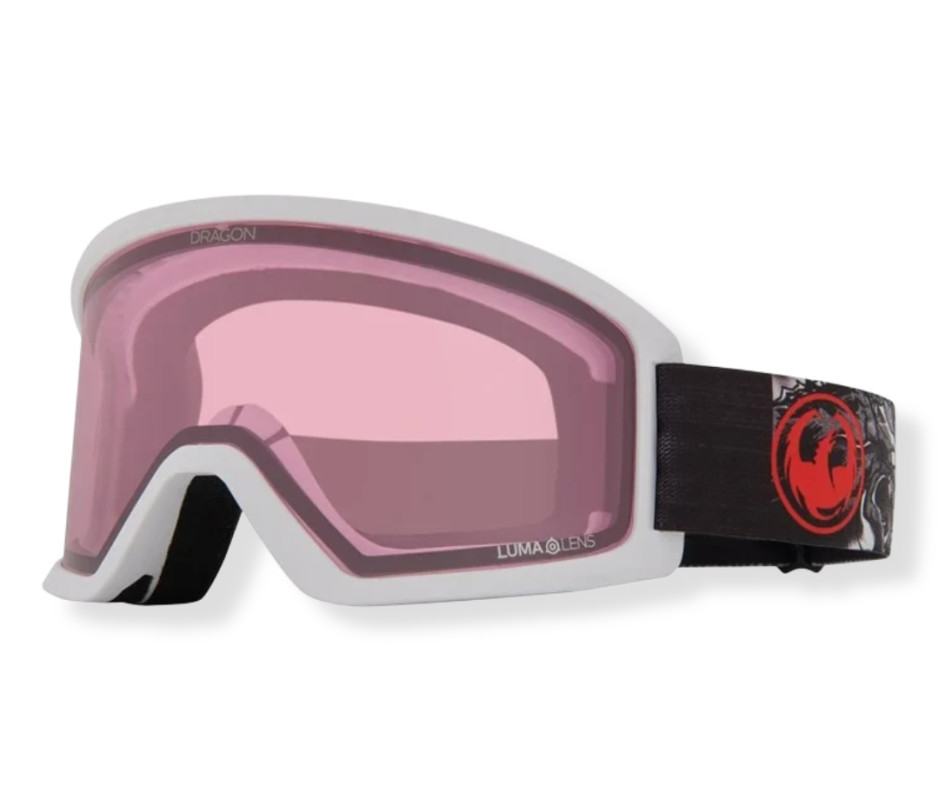
Best Budget Ski Goggles: Dragon DX3 OTG
Courtesy Image
Good goggles don’t come cheap and if you haven’t bought a pair in a while you might be disappointed to find the big brands’ flagship models are between $200 and $300 these days. Those goggles are great and most sub-$100 goggles are not, but Dragon’s DX3 OTG goggles are an exception.
The cylindrical lenses won’t give you quite the field of view as bubble-like spherical models, but they’re built to accommodate prescription eyeglasses and the extra volume can help with fogging, even if you don’t wear glasses. The big downside is the lens isn’t interchangeable, so you can’t swap in different lenses for different conditions or replace a scratched lens. Still, for the price, you could buy two pair and still come out ahead on price compared to most goggles.
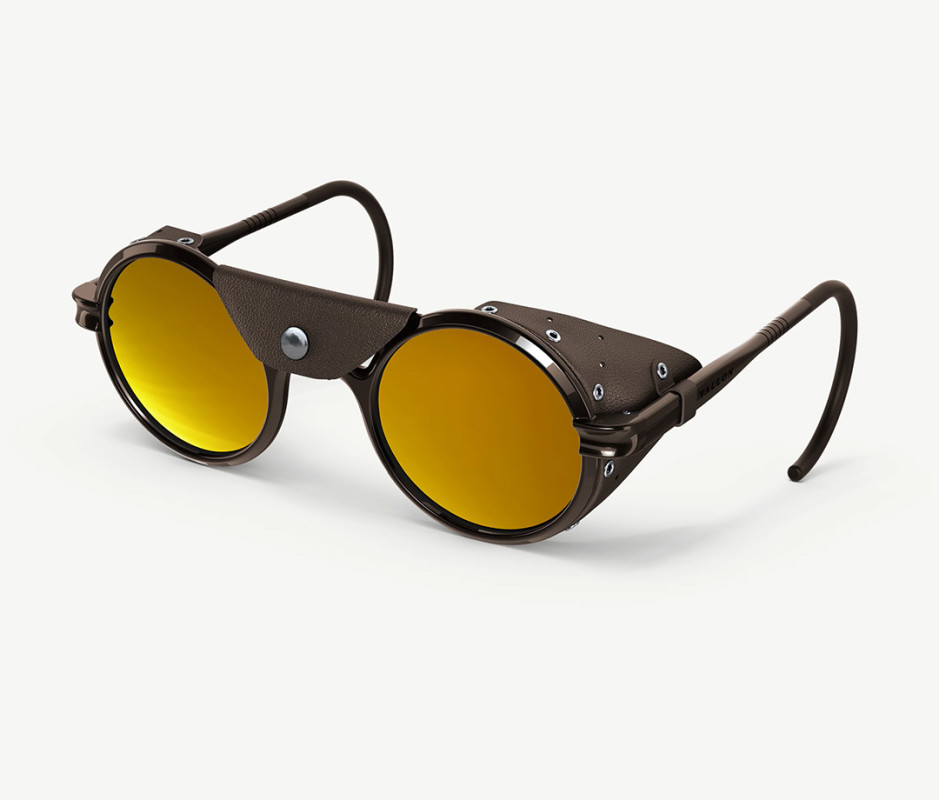
Best Glacier Glasses: Vallon Heron Glacier Glasses
Courtesy Image
These vintage-looking ski shades let you channel your inner polar explorer and are perfect for casual spring skiing, ski touring, or just looking like you belong at apres. The style walks in the room first, but the removable leather side shields, shatterproof build, and ultra-dark lenses all serve a function. The design protects your eyes by keeping rays from getting around the polycarbonate lenses which only let through 5 to 7 percent of ambient light. This is key for the unsheltered, reflective high alpine environment, but keep in mind they’ll feel very dark on an average partly cloudy day.
Why You Should Trust Me
I’m a lifelong skier raised on icy upstate New York hills currently based in Breckenridge, Colorado, where I ski over 100 days a year, split fairly evenly between backcountry and resort. I spend those days testing all manner of gear from skis to jackets to apps to avalanche beacons for Men’s Journal, Powder, Tripsavvy, GearJunkie, and I serve as editor of the backcountry ski site WildSnow. I’ve skied on four continents and aim to hit all seven eventually, but some of my favorite runs are in my backyard.