As Red Gerard flies down the slopestyle course at the Milan-Cortina Olympics next month, he might launch his snowboard off a snow-covered ramp into a switchback 1620, twisting 4.5 times in the air before landing just in time to go off another jump into an 1800, where he’ll spin five times.
But before those dizzying back-to-back jumps, he’ll be standing silently at the start area with his eyes closed. He’ll gently move his body as he makes those same jumps in his mind. The 25-year old will feel the wind, the cold, and the slickness of the snow on the jump. He’ll hear the sound of his Arbor snowboard scraping and his jacket lightly rustling as he takes off. He’ll feel the muscles of his core and hips initiating the twist, and see the spot where he’ll land after the whirling 1800-degree spin.
For Gerard, the reigning X Games slopestyle champion and the gold medal winner in the event at the 2018 Olympics, this is a mind movie he’ll have watched scores of times with each of the six tricks in his run, and a mental rehearsal of the complete run dozens of times…right until he drops in to go for gold. And he isn’t alone in this kind of mental imagery practice. Competitive rock climbers, luge athletes, figure skaters, marathon runners, the Formula 1 drivers you see on Drive to Survive, and gobs of other athletes employ visualizations like these in the run-up to competition.
That’s because mental practice runs can have powerful impacts on performance. Piles of studies on athletes have found that imagery boosts how well they play, and in some, it’s even been shown to help them be tougher and more resilient in the face of setbacks.
You don’t have to be an Olympic athlete—or an athlete at all—to use these techniques to make yourself more resilient in the gym, your relationships, and at work. Here’s more on how and why visualization works, and more importantly, how to steal Gerard’s mind-strengthening secrets to level up your life with tips from two experts on visualization: Joshua Klapow, Ph.D., a clinical psychologist and the founder of Mental Drive, and Paul McCarthy, Ph.D., a licensed clinical psychologist and sports psychology consultant.
The Men’s Journal Fitness Special is on newsstands now. Order your copy today!
Why Visualization Works, and How It Can Up Your Game
The reason Gerard’s mental rehearsal helps his performance is mind-blowing. It creates an actual memory in our mind of something we haven’t yet done.
“Memory is fascinating. Essentially, we can remember stuff that wasn’t true, and we remember things, and we distort them based on time and place and so on,” says McCarthy. That can make our memories unreliable, but it also lets us manipulate them to our benefit. “Essentially, what imagery is doing is creating a memory set for us as if we’ve been somewhere we haven’t been before.”
Those memories can be used to help you master skills. In studies, visualization techniques have helped basketball players improve their free-throw shooting, golfers get better at putting, and surgeons improve their performance when patients are under the knife. Full-performance visualized memories, as those Gerard uses before an Olympic run, help those same surgeons feel more confident in the OR, and help athletes feel less stress during matches.
Related: The Mindset Trick That Helps Freeride Athletes Ski Confidently in Life-or-Death Runs
This doesn’t mean you can make like Neo in The Matrix. Imagining you can pilot a helicopter or beat Laurence Fishburne in kung fu won’t make it so. You have to have some knowledge of the task at hand for the visualization-created memory to be effective, says Klapow. And the more realistic it can be, the more impact it can have on your performance.
That means not just focusing solely on perfect scenarios.
“That kind of classic ‘see yourself at the finish line. See yourself as a success’ visualization…that’s not going to be that helpful, because it doesn’t do anything other than positive affirmation,” Klapow says.“Imagining ourselves executing flawlessly is fine. But we don’t want to only see ourselves winning the race, because the journey is likely going to involve more than just perfect execution.”
Instead, effective visualization practices help identify and prepare you for those snafus, McCarthy says, so you’re armed with ways to cope with them.
Once you’ve created these “I can do it” memories through visualization, practicing recalling them before competition—as Gerard does—gives them the power to drown out the nagging, negative voices that can pop into your head.
“Our long-term memory is like a warehouse, and the forklift driver who stores the pallets of memories isn’t very hardworking. So he takes the most recent pallet of memories and just drops them by the front door,” McCarthy says. “When we go back to our working memory, trying to do something, that forklift driver picks up the pallet closest to the door. So we want that pallet of [recent] memories to be functional, helpful, useful, and beneficial.”
Malachi Gerard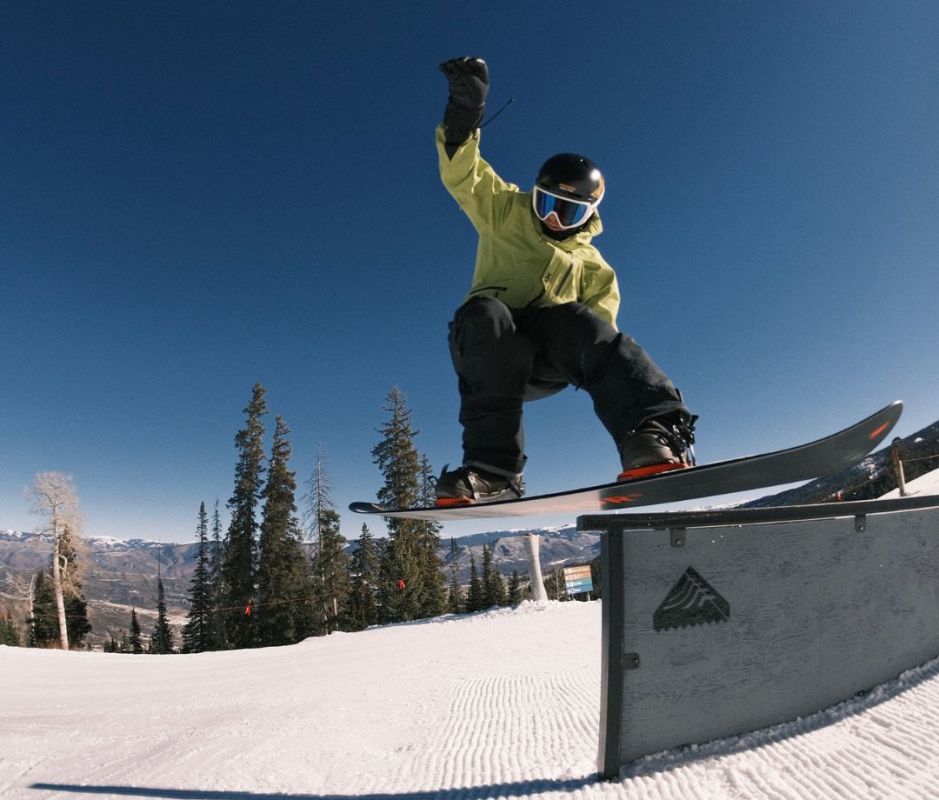
Visualize Big Moments to Crush Them: Your 4-Step Plan
When you’re going for gold in your own life—giving a key presentation or pitch at work, running a half-marathon where you’re gunning for a PR, delivering a best man’s speech at a wedding, or even having a difficult conversation with a loved one—using mental rehearsal and visualization can help you perform better, and with more confidence.
But you’ve got to imagine more than just the perfect scenario, and also visualize more than just the words you say. You need to vividly picture everything that’s going to happen on the big day for the most realistic visualization possible, including the sights, sounds, smells, and more.
For this, McCarthy suggests a model called “PETTLEP,” which stands for physical, environmental, tasks, timing, learning, emotion, and perspective. Basically, it’s imagining not just “I’m giving a pitch to the brass,” but everything that’s involved in that experience to make it as vivid as possible. In an effective visualization of this kind, you’d imagine how the floor feels under your feet, the increase in your heart rate as you start the presentation, the sound of the air conditioning in the room where each executive is sitting, the smell of the room…everything.
When performing your visualizations, try to make these details as vivid as possible. And keep PETTLEP in mind as you follow McCarthy and Klapow’s four-step approach to success before your big moment.
Step 1: Write down Plan A, B, and C
Start by imagining, and writing down, what would happen in a perfect performance, Klapow says. Write down what you’ll do, but also what you’ll feel. If you think you’ll feel nervous when you walk in the room, write that down.
Plan A
Then, Klapow says, highlight the parts of Plan A that are the keys to perfect results. For a half-marathon, that might be sticking to your early pace and not going out too fast. It might be controlling your breathing and feeling bouncy. For a presentation, success might hinge on maintaining a measured pace of speaking, keeping your heart rate under control, and using inflection at certain key points with your voice.
Make a bulleted list of these keys. In Plan A, they all go great.
Plan B
Plan B, Klapow says, is “clunky.” Instead of imagining every single thing that can not go according to Plan A, you’ll focus on what can go a little haywire around your key success points. Write down these potential hiccups and how you’ll cope. For the half-marathon example:
• You’re going out too fast. To cope, you’ll plan to remind yourself not to watch those around you and stick to your watch.
• Your heart’s racing, so your breathing doesn’t feel normal. To cope, you’ll remember that you’ve trained hard and control your breathing to calm down.
• Your footfalls feel heavy instead of light and bouncy. To cope, you’ll focus on the feeling of bouncy steps and try to actively change how you’re running.
These coping mechanisms, Klapow says, will be key to your future visualizations. You’ll envision these hiccups happening and create memories of yourself handling them with aplomb.
Plan C
Finally, write down Plan C. This, Klapow says, is when everything’s going off-plan. In this case, he says, you’re planning how you’d avert disaster.
In the case of your presentation, this might be that the projector’s not working, so you can’t show your deck as planned. In Plan C, imagine these “disaster” scenarios, and how, Klapow suggests, you can aim for “good enough” and “surviving” versus either complete success or complete failure.
Step 2: Practice These Plans Aloud
Rehearse each plan out loud.
“As we do it verbally, it’s much more likely to trigger the emotions associated with the actual experience, and what might actually happen,” he says. You might notice your heart rate going up at key points, or your voice cracking during a speech. You may also feel yourself moving your body slightly, the same way Gerard or an F1 driver would while rehearsing. “You approximate as much of the experience as possible.”
In the case of a speech, you’re not just rehearsing what you’ll say, but saying each step of what you’ll do. Do this with Plan A, Plan B, and Plan C, he says, rehearsing what you’ll do, say, and how you’ll cope with the hiccups.
Step 3: Mentally Visualize All 3 Plans
Now that you’ve spoken your plans aloud, it’s time to do the mental imagery. Close your eyes, and just as you did verbally, imagine every detail as realistically as you can. Try to see, hear, and feel every aspect of your environment and every action you’ll take. Do this several times in the run-up to your event.
These types of visualizations can be done many times before the event. In a meta-analysis on visual imagery in sports, scientists found the strongest performance boosts by those who visualized for 10 minutes, three times per day, for 100 days.
Step 4: Just Before the Event, Visualize Plan A.
Before a race or run, this is what a pro athlete like Gerard is doing, Klapow says. They’ve prepared for the contingencies, so if hiccups occur, they’ll be ready to cope. But in the moments before their run, they’re picturing that perfectly executed experience. Do this just before your big moment.
Visualize Yourself Swole: Master New Skills at the Gym with Your Mind
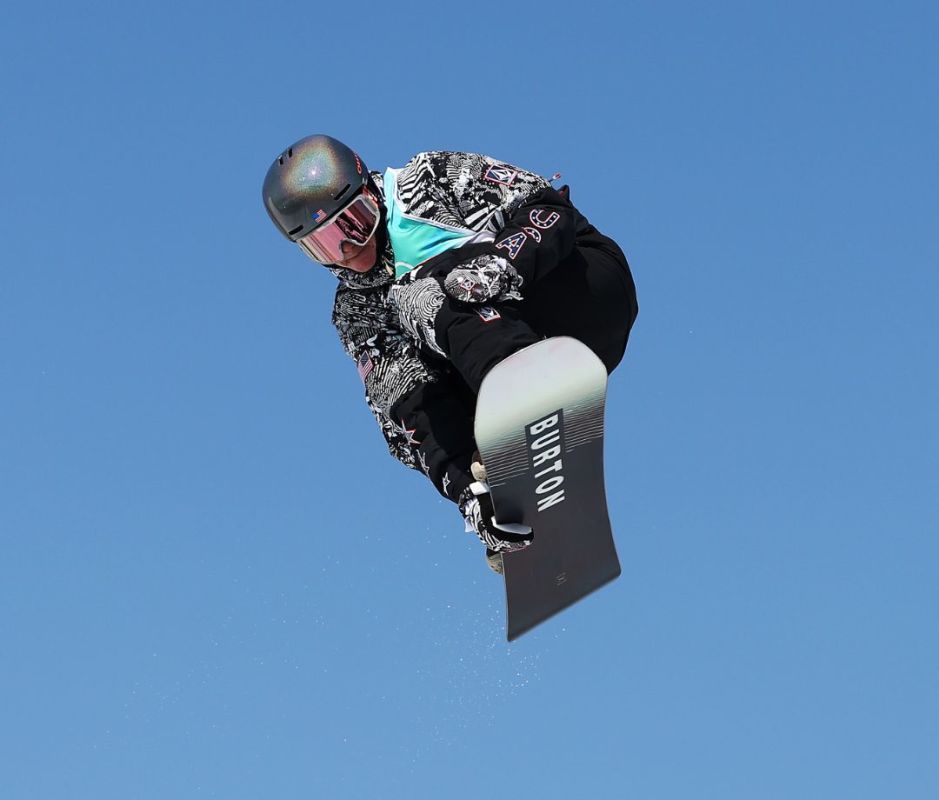
Before he even tries a new trick, Gerard says he’s visualized it dozens of times.
“I try to have a pretty good visualization of where my points are, where I’m going to spot and look back for my landing,” he says. “I figure it out in my head. And I at least 90 percent know that I’m going to make it to my butt, in the worst case scenario.”
You may not be spinning four or five times, but visualizing a specific skill in this way can help you in the gym with simpler moves, like heavy squats, bench presses, and other moves you’re already doing. In a small Canadian study from 2007, scientists had one group of athletes practice a hip flexion exercise, while another group just visualized the exercise. (A third group did nothing.) Both groups trained—either mentally or physically—five times per week for 15 minutes in each session. After two weeks, the physical training group had increased their hip flexor strength by 28 percent. The mental group, who only performed the exercises in their minds, increased their strength by 24 percent.
To do this kind of visualization, McCarthy says, as with a full rehearsal of an experience, we need to make it as realistic as possible in our minds.
To do this, he suggests something psychologists call the ‘PETTLEP’ model. It stands for physical, environmental, tasks, timing, learning, emotion, and perspective. Basically, it’s imagining not just “I’m doing a squat,” but everything that’s involved in that training to make it as vivid as possible. In an effective visualization of this kind, you’d imagine how the floor feels under your feet, the bar feels on your shoulders, the sweat feels as it starts to soak through the chest of your shirt, the sound of the bar unracking, the smell of the room…everything.
When you can imagine this nearly virtual reality-level experience in your mind with your eyes closed, you can mentally go through the motions of your set and feel the actual difficulty of squatting.
When you do, McCarthy says, “At the neural level, we are engaging similar pathways to the experience [of actually doing the exercise].”
How to Visualize to Tackle a Totally New Skill
What about an exercise you can’t do yet, but want to? Let’s say you’ve always wanted to do a muscle-up. You’re pretty strong on pullups, and feel you’ve got the overall oomph to get yourself over the bar…but you’ve never quite gotten there. McCarthy says that visualization can help here, too, but it needs some real-world help first:
Watch Videos
Watching others near our level do something we aspire to helps our confidence, McCarthy says. But it also actually impacts our brain’s ability to understand and do the task.
“If we watch a video of someone doing it, and watch it over and over again,” McCarthy says, “mirror neurons in our mind allow us to see something and make sense of it in our own memory.”
Get the Sensory Experience
You may not be able to do a muscle-up on your own, making it difficult to visualize and mentally experience all the sensations of the movement. But you can fake it! McCarthy suggests getting a friend or other spotter to help you try the full range of the exercise so you have an idea of which muscles engage as you swing up and over the bar. This will help you visualize the full, unspotted experience.
Then Visualize
With this sensory experience in your mental arsenal, use these feelings to inform your visualization: Imagine yourself going through each step of the exercise, feeling each portion in your body where you need power, effort, or skill. Combine that with continued physical spotter practice, or practicing different parts of the movement, to progress towards your goal.