Kill Bill: The Whole Bloody Affair is the definitive version of Kill Bill, the way Quentin Tarantino’s kung-fu homage was meant to be seen. The four-hour-and-forty-one-minute double feature (which includes a 15-minute intermission) restores the original intent of Tarantino’s two-parter: that they be seen as one continuous film. (Indeed, Tarantino counts them as one in his filmography; that’s why his purported 10th film is, conservatively, at least his 11th but more like his 14th or 15th.) In addition to fusing the two films, The Whole Bloody Affair includes never-before-seen footage, including some violence cut to avoid an NC-17 rating, and trims some of the connective material between the films. These are all the changes made to Kill Bill: The Whole Bloody Affair.
You’ve Never Seen Kill Bill Like This
You may have seen Kill Bill, but you’ve never seen it like this before. Blown up on the largest screen available, the sumptuous gauziness of Robert Richardson’s cinematography can be seen in its full, breathtaking glory; Yuen Woo-ping’s dazzling, witty choreography pops from the screen; and the expansive desert vistas of part two all but swallow you. But the most astonishing thing about The Whole BloodyAffair is that, for a film closing in on five hours, it doesn’t feel a fraction of its length. The 281 minutes absolutely rocket past, so much so that one could easily forgo the intermission, and even those who have trouble maintaining attention for a two-hour movie have no trouble seeing The Whole Bloody Affair through.
Vol. 1 Includes a New Anime Sequence…
Many of the changes made to The Whole Bloody Affair are cosmetic; which is to say, they’re small tweaks made to more seamlessly blend to two halves. However, there is a fairly substantial amount of new material added to part one. The most significant addition is a never-before-seen sequence added to the anime backstory of O-Ren Ishii (Lucy Lui) in which the teenage assassin battles Pretty Ricky, the henchman of Boss Matsumoto who killed her father and mother.
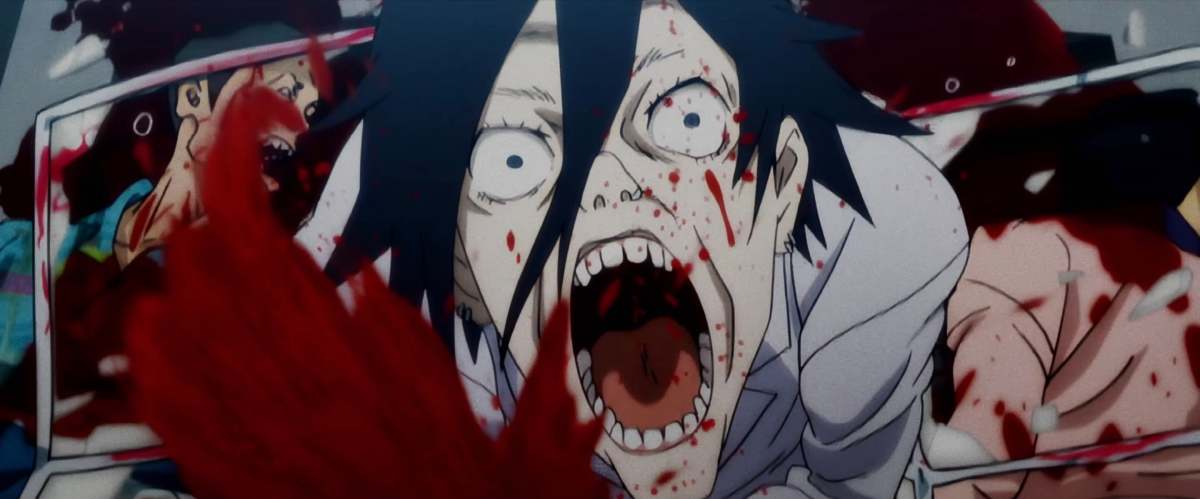
After O-Ren kills Boss Matsumoto, she confronts Ricky and his security detail in an elevator, making quick work of his guards before using her father’s grenades to finish Ricky off. But Ricky tosses the grenades back at O-Ren, setting off an explosion which catapults both of them into the elevator shaft. O-Ren eventually finds Ricky scaling the shaft wall and stabs him, sending him into the darkness below.
It’s undeniably exciting to see this new sequence, but one can understand why it wasn’t included in the original film. At nearly five minutes long, this passage practically doubles the length of O-Ren’s flashback and doesn’t add anything new. The original cut, a flash-forward from teenage O-Ren killing Matsumoto to her at age 20 as “the world’s most-feared assassin” is much stronger and conveys the same purpose.
…and Lots of Added Violence
The other changes are much less notable, but no less interesting. Much has been changed about the marathon battle at the House of Blue Leaves, including the removal of the black-and-white filter instituted to guarantee an R rating. For the first time, the entire action sequence is presented in color, with all of the gory glory that implies. Finally, one can see Uma Thurman slice that Crazy 88 down the middle and lop off all of those ankles in glorious color. Much of the music has also been removed from this sequence; and when a cue does drop late in the day, it’s a different track. This is a huge improvement over the original version, which may have included the music to soften the intensity of the violence. Now, there’s a genuine ferocity to the revenge that feels purely cinematic.
Lionsgate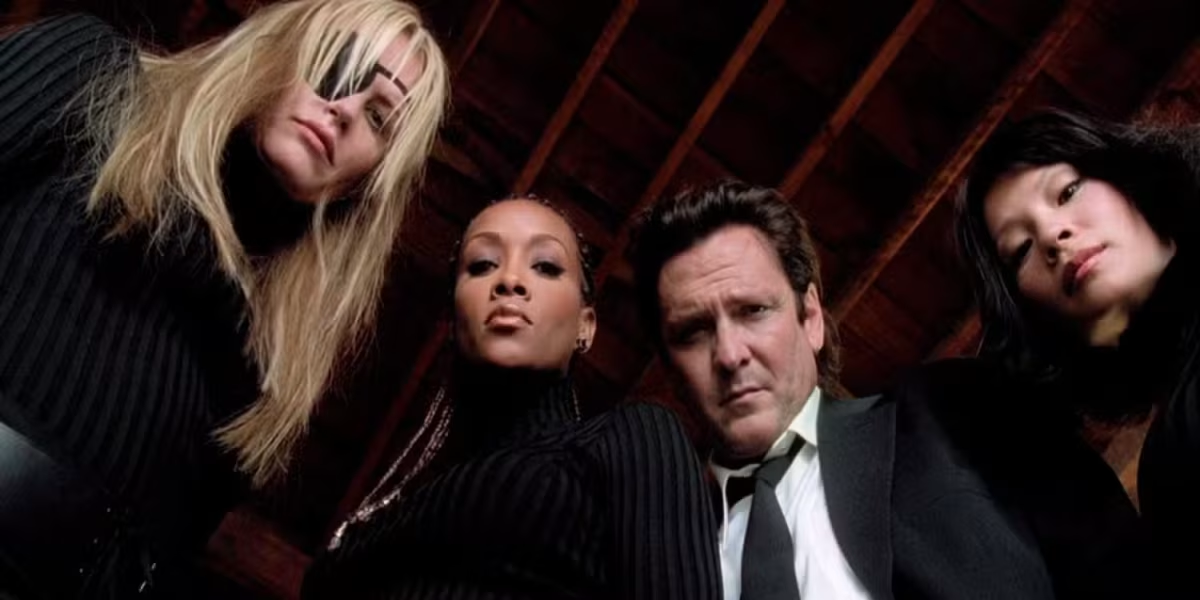
Also in the viscera department, there’s an added shot at the end when Thurman’s The Bride holds Sofie Fatale (Julie Dreyfus) in the trunk of her car. While in the original film Sofie is only seen losing one arm to The Bride just before the fight at the House of Blue Leaves, The Whole Bloody Affair restores a previously unseen shot in which The Bride lops off Sofie’s other arm, sending a torrent of blood spraying onto the camera. Finally, it solves the mystery of why Sofie had neither of her arms when The Bride rolled her into the hospital parking lot (though we could surmise).
Vol. 1 Contains a Different Ending
Another change made to the final sequence removes any cliffhanger elements leading into part two, something which was originally necessary to give Vol. 1 more of a substantial arc. Unfortunately, this means removing one of the very best cliffhanger endings in movie history, when Bill (David Caradine) asks Sofie of The Bride, “Does she know her daughter is still alive?” But it does allow for a higher emotional impact when it’s revealed at the end of part two that The Bride’s daughter is still alive, and living with Bill. Now, the audience finds out at the same moment Thurman’s character does. Also sliced from the end of part one are the flash-forwards to part two, including Bud (Michael Madsen) allowing that The Bride “deserves her revenge.”
Vol. 1 now concludes with The Bride instructing Sofie of the remaining names on her hit list, “Tell them I’m coming.”
Lionsgate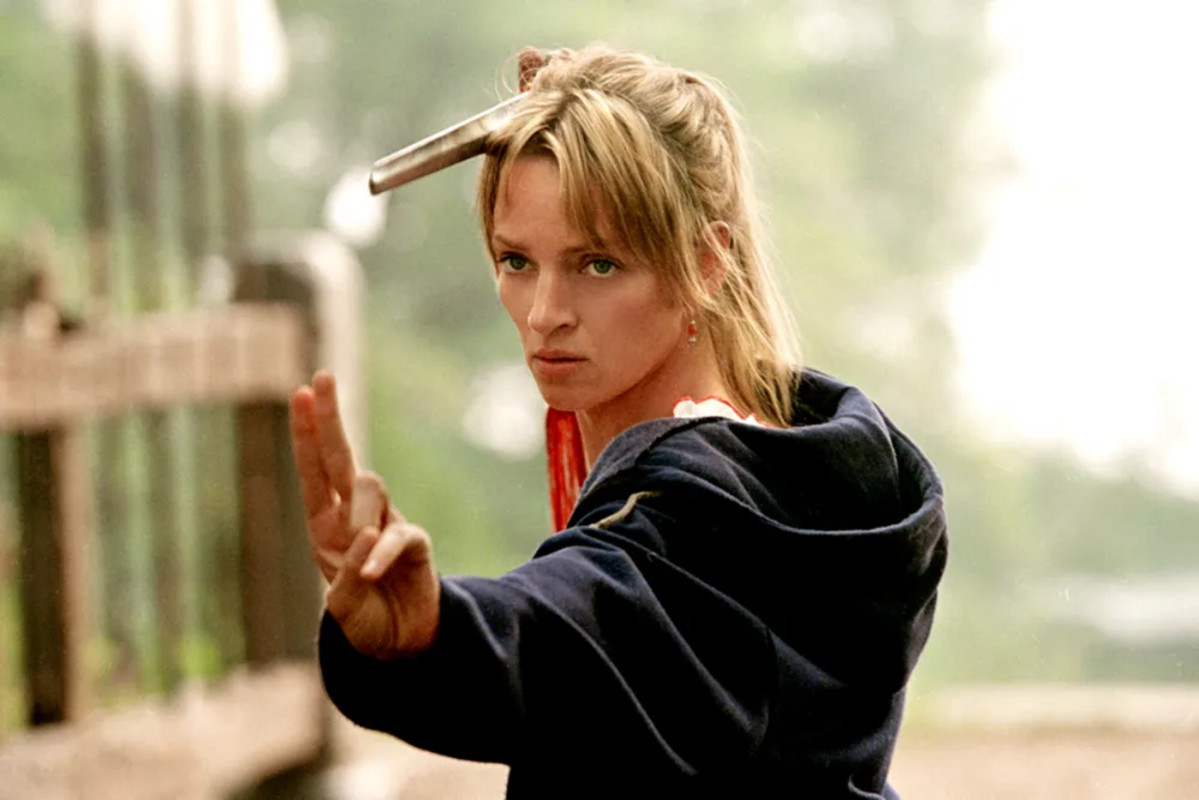
Much of Vol. 2 Remains the Same, with One Big Difference
There are no substantial changes made to Vol. 2, although The Bride’s soliloquy at the beginning, recapping the events of Vol. 1, has been cut. There was a not-totally-welcome hokiness to that preamble, including a moment when The Bride refers to her massacre as “what the trade papers called ‘a roaring rampage of revenge’” that makes one wonder why Deadline is covering a Tokyo gang war. But it also established a rather indelible forward momentum that is now, if not missing, then fondly recalled.
Lionsgate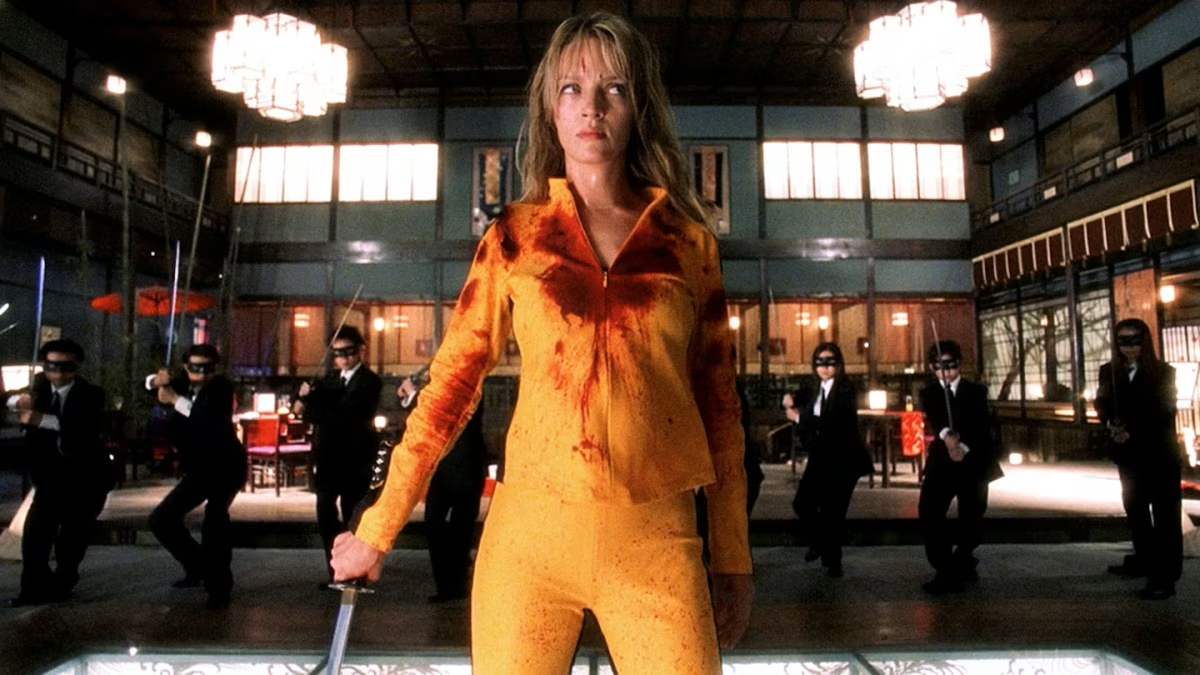
Given that Tarantino hasn’t made a great movie in 16 years and now treats callous pontification like it’s his full-time gig, it can be easy to forget what a masterful filmmaker he can be. There’s no better example of his specific skill than Kill Bill, and it’s no coincidence that he made the film(s) in the middle of his most furtive period. In between his two great (and decidedly “serious”) movies—Jackie Brown (1997) and Inglourious Basterds (2009)—he made his most comic-book-inflected films with Kill Bill and Death Proof (2007). Both are slick genre movies of the sort the director grew up on, drum-tight products from a master curator of kitsch that interrogate his singular media obsessions. Kill Bill is the most purely Tarantino movie the director has made, a fusion of passion and high and low influence that can only happen once in a lifetime.