The Consumer Electronics Show can go one of two ways for the world’s biggest tech companies. Oftentimes, it proves to be a victory lap of sorts for those who have created unique and bold products. However, this year, one of the world’s most well-known companies departed the convention with a trophy they likely left behind in a trash can. CES runs its “Worst in Show” contest annually, and Amazon found itself taking home that honor in one pivotal category for its AI Ring doorbell camera system. Unfortunately for the tech giant, the reason it earned a “Worst in Show” nod is one that’s bound to raise some red flags with buyers.
Why Amazon’s Ring AI Doorbell Camera Was Named ‘Worst in Show’
There is some good news for Amazon, as it didn’t receive the overall “Worst in Show” award at the Consumer Electronics Show. As the Associated Press detailed, that anti-award was given to Samsung for its “Bespoke AI Family Hub.” The judges, made up of consumers and privacy advocates, gave Samsung the overall Worst in Show award after its product reportedly struggled to detect what people were saying due to the noise at the Las Vegas technology expo. The report also cites “complications and reliability concerns” as additional negative marks.
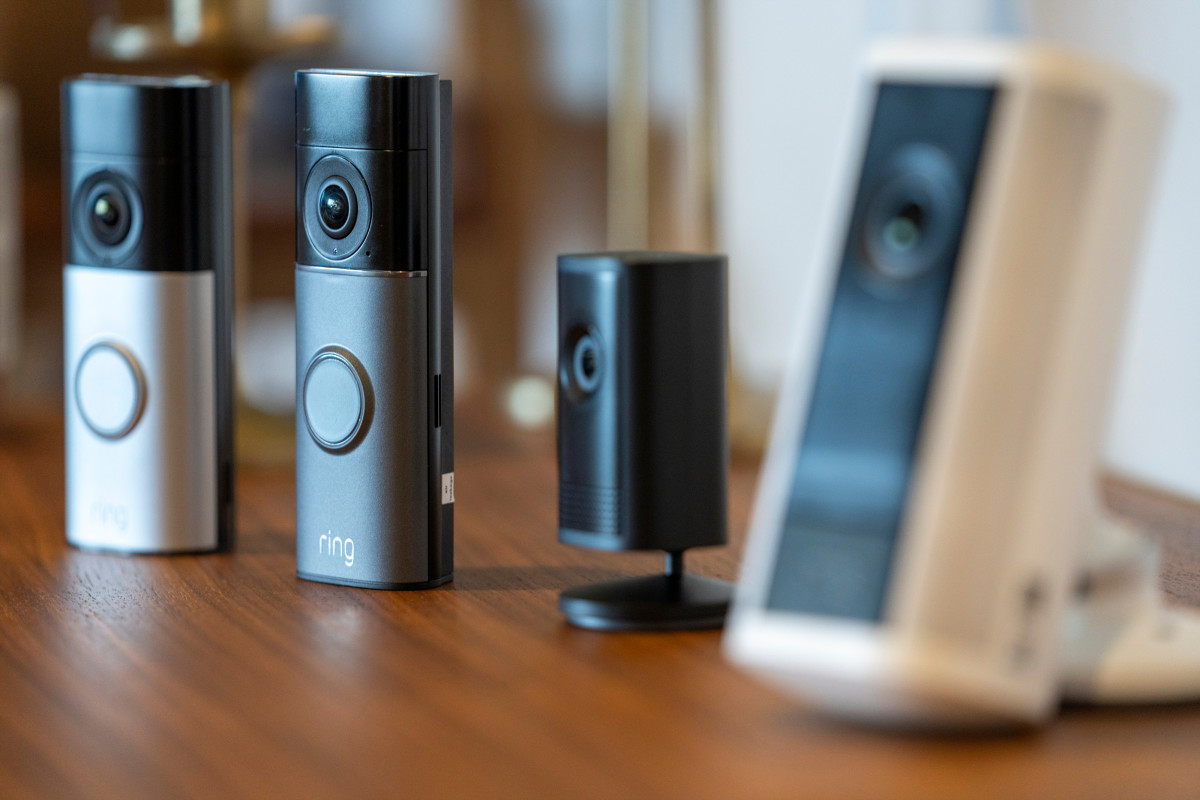
As for Amazon, the company received quite possibly the second-worst overall “Worst in Show” honor, especially considering the product. The Amazon Ring doorbell camera system reportedly featured several new features, but it was still dubbed the worst product revealed for privacy.
“[Amazon’s] doubling down on privacy invasion and supporting the misconception that more surveillance always makes us safer,” Cindy Cohn, executive director of the Electronic Frontier Foundation, cited as a reason for the decision.
The responses didn’t get much better from there. Amazon’s Ring doorbell showcased a new feature called the “AI Unusual Event Alert,” targeted at detecting unexpected guests or unwanted wild animals. This feature apparently wasn’t well-received, as the AP highlighted in Cohn’s continued evaluation.
“That includes facial recognition,” Cohn said of the new Ring features. “It includes mobile surveillance towers that can be deployed at parking lots and other places, and it includes an app store that’s going to let people develop even sketchier apps for the doorbell than the ones that Amazon already provides.”
It’ll be interesting to see how the feedback impacts Amazon’s latest Ring doorbell. While the two tech giants, Samsung and Amazon, received the nod for a Worst in Show award, they were far from the only ones.
An ‘Always on 3D Soulmate’ Headlines Other ‘Worst in Show’ Winners at CES

The unique and innovative technology on display at CES obviously featured some incredible products. However, Samsung and Amazon found themselves joined by several other companies with the award that no one wants. There was a category for “Worst in Show” for the environment, a “People’s Choice” award and one for security, among others.
One of the most surprising products unveiled came from a Chinese company, Lepro, which created a 3D AI soulmate that tracks emotional signals and eye movements. Here’s a breakdown of the various “Worst in Show” awards given at this year’s CES:
- Overall “Worst in Show”: Samsung’s Bespoke AI Family Hub refrigerator.
- Worst in Show for privacy: Amazon’s Ring doorbell camera system.
- Worst in Show for the environment: Lollipop Star’s lollipop that plays music while eaten.
- “People’s Choice” for Worst in Show: Lepro’s AI companion called Ami, dubbed as an “always-on 3D soulmate.”
- Worst in Show for security: Merach’s treadmill featuring the first AI coach that talks to the user.
The product had security concerns, and its fine print also stated: “We cannot guarantee the security of your personal information,” according to the Associated Press. - Bosch received two “Worst in Show” awards for a “Personal AI Barista” espresso machine and an anti-theft battery lock for an e-bike app.
According to the AP’s rundown, most companies didn’t respond to requests for comments, including Amazon. However, Samsung defended the Bespoke AI Family Hub, highlighting the differences on a trade show floor compared to someone’s home.
Bosch also responded in a statement, ensuring that “earning and keeping trust” with customers is at “the core of our company values.” The German tech company also pushed back on the issues stemming from specific features of its products, explaining that judges were incorrectly suggesting that Bosch was forcing buyers to use optional features.
Related: The Ultimate Vacation Package? Tech Company Opens Reservations For $10M Moon Getaway