Cold mornings and loaded cars drop tire pressure fast. Your best fix is a cordless inflator that hits the door-jamb sticker PSI without guesswork—the basics are the same safety advice you’ll find in NHTSA’s tire-safety guidance. Start with capacity: a compact unit rated to 120–150 psi has the headroom for car tires and most spares. Make sure it has auto-stop with a digital gauge so you can set a target and let it shut itself off; accuracy within about ±1 psi keeps handling, braking, and wear in the sweet spot that USTMA’s maintenance page calls for. A solid duty cycle matters too—look for a continuous-run rating long enough to do all four corners without overheating, and pick dual power (battery plus 12-volt) so you’re not stranded by a dead pack.
Photo by Andrea Piacquadio: https://www.pexels.com/photo/man-changing-a-car-tire-3806249/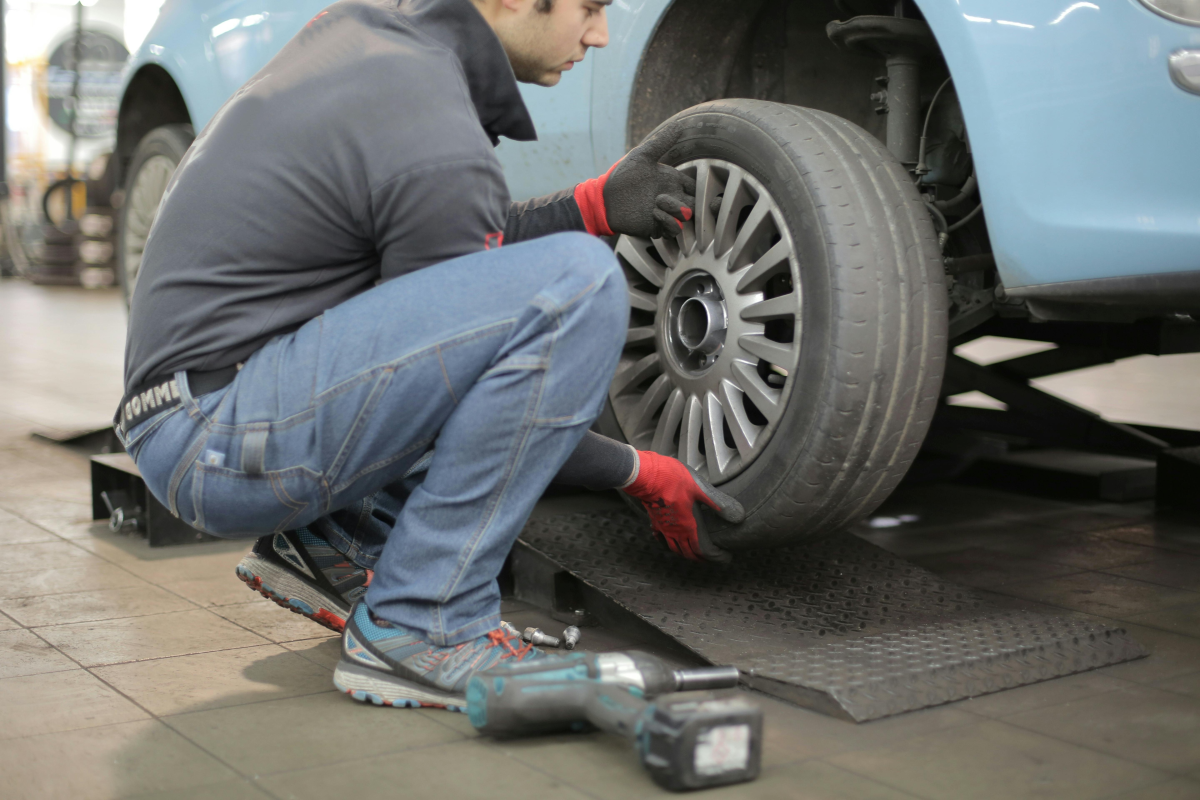
Hardware details make or break the experience. A threaded Schrader chuck seals better with numb fingers than a flimsy clip-on; a bleed button lets you trim pressure when the sun warms things up. A flexible hose stores cleaner than a stiff whip, and a small LED helps when the flat shows up after dark. Keep the kit reachable—glovebox or door bin—not buried under luggage.
Use the inflator like a pro. Check tires monthly and any time temperatures swing—“cold” means before you drive, and that’s when readings are most reliable, per FuelEconomy.gov’s maintenance tips. Set the target to the placard PSI (not the sidewall max), attach the chuck, and let auto-stop finish. Re-cap the valves, then re-check after the first true cold snap; pressure typically drops about a pound or two for every 10°F. If one tire needs air more than once a month, suspect a slow leak and get it inspected—don’t mask it with constant top-offs.
A good cordless inflator does more than quiet TPMS warnings. It keeps braking distances tight, fuel economy steady, and tread wear even—small habits that add up over a winter of driving.
My Verdict
You want fewer warning lights and better grip for the price of one glovebox tool. Buy an inflator with real headroom, auto-stop, and a threaded chuck; check pressures cold, monthly, and you’ll skip most roadside headaches.