Granite countertops are among the most appealing and durable types of surfaces you can have in your kitchen or bathroom. They are natural, incredibly strong, enhance your home’s appearance, and require minimal maintenance. So what’s the catch? You need to know how to clean them properly. Granite is a surface that needs to be cleaned in a specific way, much like stainless steel and glass top stoves. For starters, vinegar, baking soda, or any other acidic-based cleaner is not recommended. No worries, we lay out how to clean and care for granite countertops the right way.
What Makes Granite Different (and Why Cleaning It Right Matters)
Granite is a natural stone that is inherently made to last. However, because granite countertops are sealed after installation, proper cleaning is crucial to keep the sealed top layer free of stains and debris. Adriana Aziz, the operations manager at Maid for You, an Australian-based cleaning company, explains, “Cleaning granite can be risky if you don’t use the proper technique, equipment, and chemicals.”
Why Granite Needs pH-Neutral Cleaners
Most natural stones are subject to damage when they’re exposed to acidity or alkalinity. Granite is one of the most durable stones, but it can still be damaged over time if it comes into contact with acid-based cleaners. You want to avoid any product with a pH that’s too low or too high. Think of vinegar, glass cleaners, ammonia, and even baking soda. The best cleaner for granite countertops is a pH-neutral formula designed explicitly for them. Aziz notes her company “never uses any non-stone cleaning products, as strong acids and alkalines can cause chemical etching in the surface. So that means, no vinegar, no baking soda, we typically don’t even use dish soap; however, in [some] circumstances, it can be used when diluted.”
Sealant and How It Protects Your Stone
Most granite countertops are sealed after installation. It is a common practice among home improvement professionals who install granite. The sealant creates an invisible barrier that protects the stone from stains, moisture, and other debris that can penetrate its porous surface. Plus, the process prevents watermarks and discoloration, and helps preserve the natural beauty longer. Bruno Mendolini, designer, home improvement expert, and the co-founder and VP of Sales at Tile Choices, recommends sealing granite countertops annually to extend their lifespan.
Related: How to Remove Rust From Cast Iron and Re-Season Your Skillets and Pans
Common Sources of Damage
Granite countertops are hard to damage, but in some cases, using improper cleaning agents or tools or leaving a spill unattended can cause damage. Mendolini explains that cleaning products that are acidic or alkalinic “will wear away the seal over time. After that’s gone, the stains penetrate deep, and the shine dulls.”
- Acidic cleaners: Granite countertops should be cleaned with a pH-neutral cleaner. A product with too much acidity, such as glass cleaner or vinegar, can damage the sealant and the stone.
- Harsh scrubs: Soft sponges and microfiber cloths are recommended for cleaning granite countertops. Using harsh scrubbers can scratch or remove the sealant, leaving your stone subject to water damage.
- Spills: Any kind of spill needs to be cleaned as soon as possible. Leaving food or liquid spills for extended periods can cause a difficult-to-remove stain.
What You Need to Clean Granite Countertops Safely
Caring for your granite countertops is straightforward, but if you want to make a natural granite cleaner with vinegar, think twice. Experts recommend using warm water instead of vinegar.
Approved Cleaners
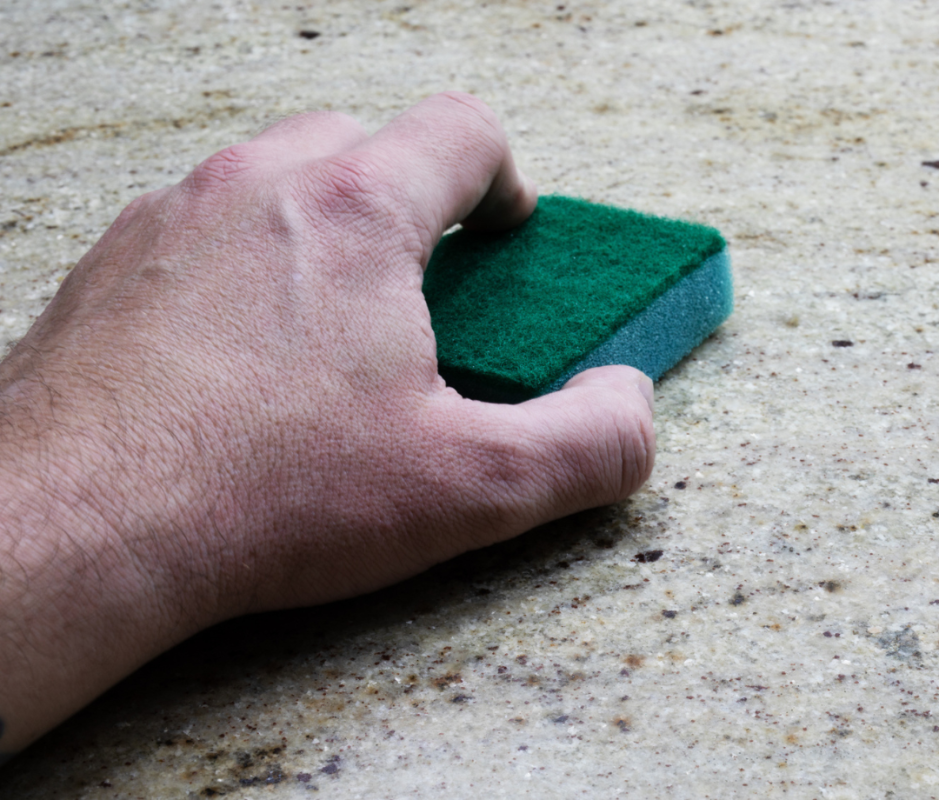
Use pH-neutral cleaners for granite countertops. Yes, they are more expensive, but they are the safest for your natural stone. Microfiber cloths and soft sponges are safe to use on your countertop surfaces. You can put as much pressure as you want to remove harsh stains and you won’t scratch your counters.
Getty Images
Cleaners to Avoid
Any acid-based or alkaline-based cleaning product could potentially damage your granite countertops; that means you should steer clear of things like vinegar, bleach, ammonia, baking soda, and lemon juice.
How to Check if Your Granite Is Sealed
Checking whether your granite is sealed or not is easy. Use a hack Mendolini recommends: Perform a “droplet test” by pouring a little bit of water on your countertop and letting it sit. “If it darkens fast, reseal,” he explains. When in doubt about whether the granite is sealed, it is best to reseal it.
How to Clean Granite Countertops Daily
The best way to keep your granite countertops clean, sparkling, and in good shape for years to come is to clean them daily.
Supplies
- Microfiber cloth
- Paper towels (optional)
- Granite countertop cleaner
Steps
- Start by removing any dishes and other cooking supplies from your countertop.
- Wipe away food crumbs, liquid spills, and other debris with a dry microfiber cloth or paper towel.
- Apply a pH-neutral granite cleaner following the manufacturer’s instructions.
- Use a clean, dry microfiber cloth to wipe the countertop thoroughly. A circular motion will do the trick. Ensure all the cleaning supplies you apply are evenly distributed across the countertop.
- Let the surface air dry, then buff the top with a clean microfiber cloth.
Tips:
- Always clean liquid spills as soon as possible.
- Keep your countertop surface dry.
- Wipe away any wet spots around your sink, under your soap dispenser, and around your drying rack.
- Use only granite cleaners.
- Avoid glass cleaners, acidic-based cleaning products, and vinegar.
- Avoid placing hot pots on top of the countertop.
Related: Your Fridge Water Dispenser Is Grosser Than You Think. Here’s How to Actually Get It Clean
Daily Wipe-Down Method
Cleaning your granite countertop should be a daily task that you don’t forget to keep your kitchen or bathroom looking sharp. Always use non-abrasive cleaning supplies, such as paper towels, microfiber cloths, or a soft sponge, to wipe down your countertops.
How to Remove Grease, Crumbs, and Everyday Messes
Inevitably, your kitchen countertops will end up with some kind of grease, crumbs, and spills, and that’s okay—cooking isn’t a mess-free task. The important part is to clean your countertops daily and use the appropriate cleaning supplies.
Grease can be removed with a granite countertop cleaner and a microfiber cloth. First, remove any excess grease, then apply the spray, and wipe the grease away.
How to Avoid Streaks and Dullness
The best way to keep your granite countertop streak-free and sparkling is to buff it after you clean it using a granite cleaner (avoid lemon, vinegar, and ammonia). Use a dry microfiber cloth or paper towels to buff the entire countertop surface, ensuring you cover every inch.
How to Disinfect Granite Countertops Without Damaging Them
Granite countertops are generally sealed and less prone to bacterial growth, but it never hurts to disinfect them every once in a while. Here’s how to disinfect granite safely.
Use an Alcohol-Based Cleaning Spray
The good news is that disinfecting your countertop is simple and you don’t need anything more than a bottle of isopropyl alcohol with at least 60 percent concentration to disinfect your countertops. All you need to do is spray it evenly, let it sit for a few minutes, and then wipe it off.
Use Safe Disinfecting Wipes (Non-Bleach)
You can opt to use disinfecting wipes as long as they don’t contain any bleach. Alcohol-based wipes will do the trick.
Avoid Harsh Antimicrobial Cleaners
Harsh antimicrobial cleaners pose a risk not only to the natural stone due to the harsh chemicals but also to a person’s well-being because they can cause respiratory issues and skin irritation.
Related: How to Sharpen Kitchen Knives at Home for Safe, Efficient Cutting
How to Remove Stains from Granite Countertops
Granite countertops will get stains and that’s okay. The good news is that because granite countertops are typically sealed, granite countertop stain removal can be done easily in a few steps.
Cleaning up Water Rings, Oil Stains, and Dark Spots
Sometimes rings and stains will appear if you leave a glass of water on your countertop, an oily spoon, or a coffee spill unattended for a long period of time. The best way to remove these stains is by following this process:
- Apply a granite stone cleaner directly to the stain.
- Let it sit for 10-15 minutes.
- Use a damp microfiber cloth to wipe the cleaner and stain away.
- Make sure to press down firmly and scrub the stain away.
- Use a dry microfiber cloth to buff the surface.
- Repeat the steps above if necessary.
And no, baking soda isn’t recommended to remove stains on granite stone because its pH (alkaline level) is too high and could break the stone’s seal. Alternatively, you could use warm water, too.
When Stains Require Professional Help
Most stains don’t require professional help; however, if your countertops are old and have scratches, these kinds of issues may be more difficult to remove unless you use power tools to grind them away. At this point, you may need a granite restoration service that can take care of removing stains and scratches, cleaning, polishing, and resealing your granite countertops. This restoration process will essentially restore or bring your countertops nearly back to the original state they were in when they were installed.
Related: Think Your Shower Grout Is Ruined? These Cleaning Hacks Bust Through Mildew Stains Fast
FAQs About Cleaning Granite Countertops
Can you use Windex on granite?
No, you shouldn’t use Windex on granite. Windex contains active ingredients that can damage your granite countertops and compromise the seal’s integrity. Although this won’t happen with a few uses; over time, if you use Windex to clean granite, the damage will be visible.
How often should granite be sealed?
It is recommended to seal granite once a year. This will help preserve and completely seal porous areas, preventing liquid from reaching the stone’s core.
Are DIY cleaners safe?
Using warm water and a microfiber cloth is safe. A natural granite cleaner that doesn’t contain vinegar, lemon, bleach, baking soda, or ammonia should be safe to use.
Can granite stain permanently?
Granite that is adequately sealed won’t stain as easily and you’ll be able to remove almost any stains. But time is of the essence. Act fast and don’t let spills and water sit for a long time to avoid hard-to-remove stains.