Men’s Journal aims to feature only the best products and services. If you buy something via one of our links, we may earn a commission.
Ooni launched a revolution in at-home pizza making with their affordable, lightweight pizza ovens that let you make pizzeria-quality pies at home. Since their Kickstarter origins, they’ve developed a whole ecosystem around outdoor pizza-making with accessories such as Detroit-style pans, bench scrapers, roasting pans, and even pre-made dough balls.
But their biggest innovation since their pizza oven is the Ooni Halo Pro Spiral Mixer which is designed from the ground up to make perfect dough. Beyond the obvious audience of diehard Ooni-owning pizzaiolos, it’s a versatile enough option to warrant consideration as a replacement for your all-purpose stand mixer.

J
Ooni says they made the Halo Pro because regular stand mixers aren’t great at making high-quality pizza dough (and they’re right), but did they also make it versatile enough to compete with the ubiquitous KitchenAid Stand Mixer for at-home mixing supremacy?
I picked up the Halo Pro when it came out in Spring 2025 for making pizza dough at home and for my pizza catering business, but it’s largely replaced my KitchenAid, though it has some shortcomings. Read on to find out if the Halo Pro is the right option for your next (or first) stand mixer.
Ooni Halo Pro Spiral Mixer Overall Impressions
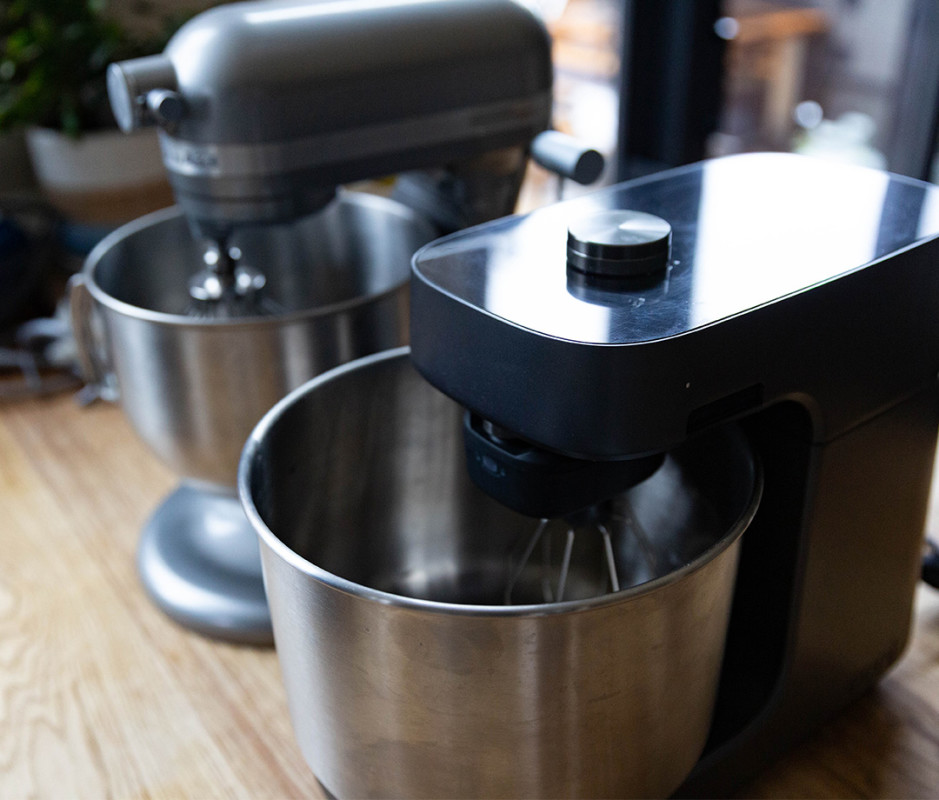
The Ooni Halo Pro Spiral Mixer is different from most stand mixers. Unlike the KitchenAid options and most other consumer-grade mixers, it’s a spiral mixer which means the bowl spins. KitchenAids like my 7-Quart Bowl-Lift Stand Mixer are planetary mixers where the attachments rotate around an axis in the bowl like a planet around a sun. What matters is that spiral mixers are far better equipped for dealing with tough, elastic doughs such as pizza dough and are what pizza shops and bakeries use.
Justin Park
Throughout this review, I’ll frequently be comparing the Halo Pro to its primary competitor, the KitchenAid stand mixer in its several configurations and sharing results of side-by-side testing. That’s because those are the other pro-style stand mixer I’ve used the most but also because they’re the most popular home mixers and the primary competitor to the Halo Pro.
While it has obvious advantages with dough-making, the Halo Pro is double the price of smaller mixers such as the KitchenAid 4.5-quart option and is aimed at serious bakers who need the power and 7.3-quart capacity. It has the requisite dough hook for developing strong gluten networks required in yeast doughs for pizza, brioche, and ciabatta but also includes a paddle and whisk attachment for other mixing, shredding, and creaming tasks to avoid being a pricey one-trick pony.
The explicitly stated reason Ooni made the Halo Pro is that planetary mixers such as the various KitchenAids are amazing all-around tools that certainly can make dough, but it’s definitely their weakest function. I’ve owned two KitchenAids and broken gears in both mixing large batches of dough for pizza catering jobs. Not only do spiral mixers create a better end product when mixing these tough doughs, they also don’t break in the process.
Justin Park
KitchenAid and other good home mixers come with a one-year warranty, but a quality mixer should be an appliance you can buy once or twice in a lifetime. If you make a lot of dough, you’ll likely need to replace that mixer many times. The Halo Pro takes the purpose-built dough-making abilities of pro spiral mixers and brings it into a reasonably priced home appliance which wasn’t really available until its release.
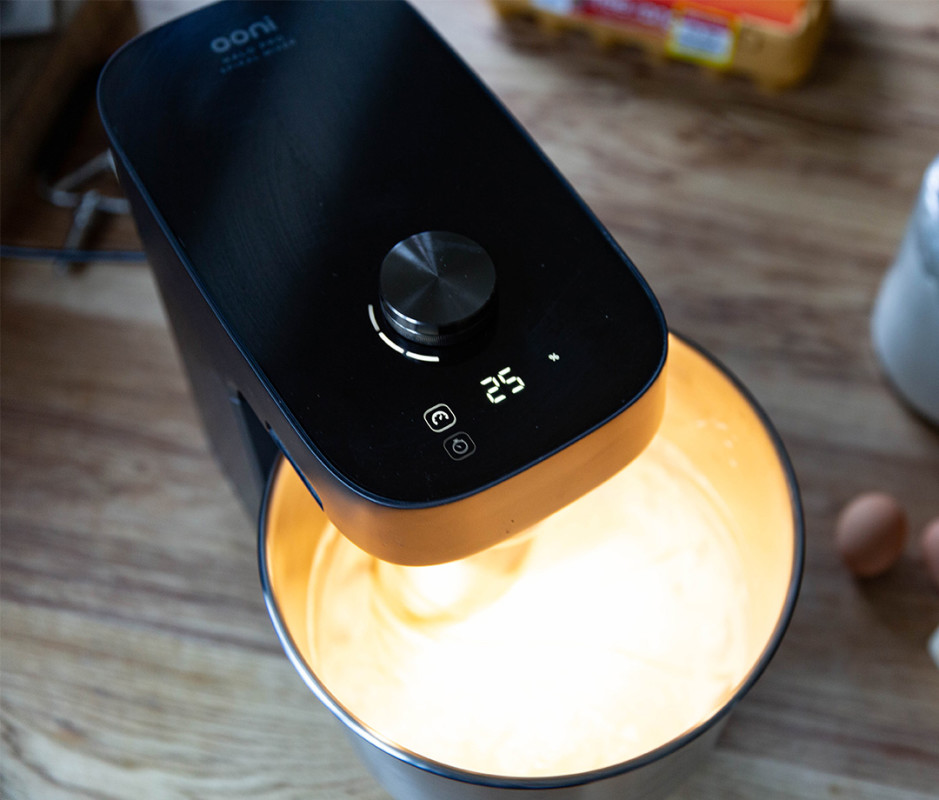
Unlike the KitchenAid mixers which are satisfyingly analog, the Ooni is sleek and modern with a digital touchscreen. There’s one large on/off button that also spins to crank the speed up or down but overall it’s a much more modern entrant to the category. This difference doesn’t change much about operation, but could be a good or bad thing depending on your aesthetic preferences for your kitchen.
Pros
If, like me, you use a mixer mostly for making larger batches of dough, there’s a lot to like about the Ooni Halo Pro. Even though the capacity is nearly the same as my KitchenAid 7-Quart, it easily handles a 20-ball batch of pizza dough and creates a better product in less time. The flatter bowl and spiral mechanism somehow can handle that 20-ball dough while the KitchenAid maxes out with an 8-ball batch and still often whines and dough bubbles out of the bowl, creating a mess. The Halo Pro also doesn’t shear off gears, heat up, and sound like it’s dying.
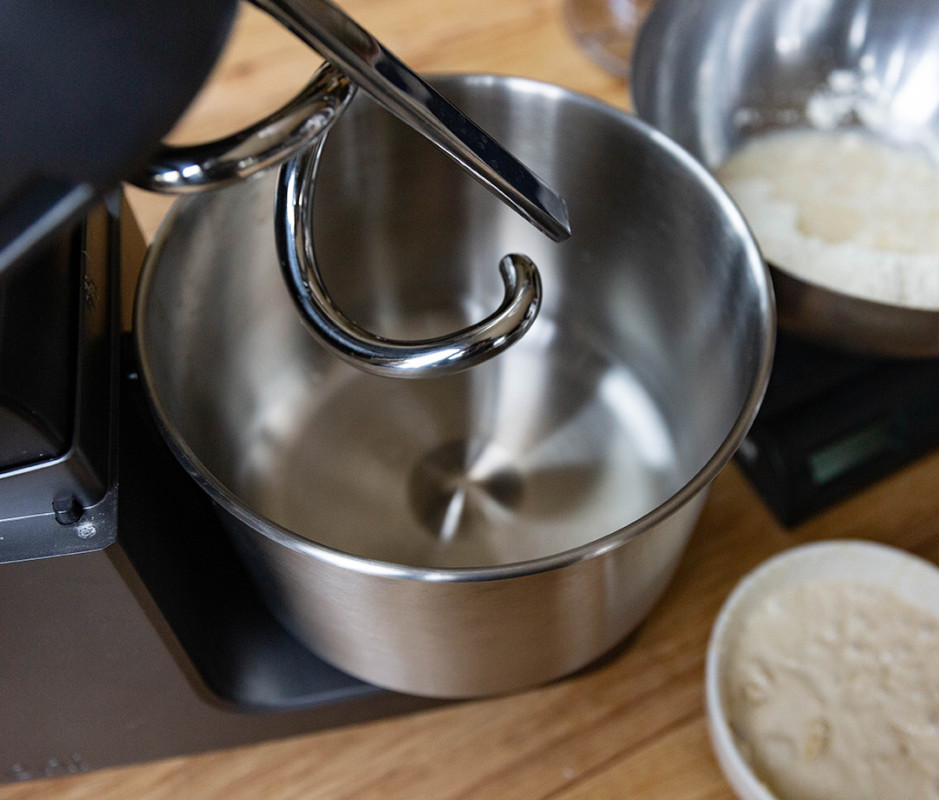
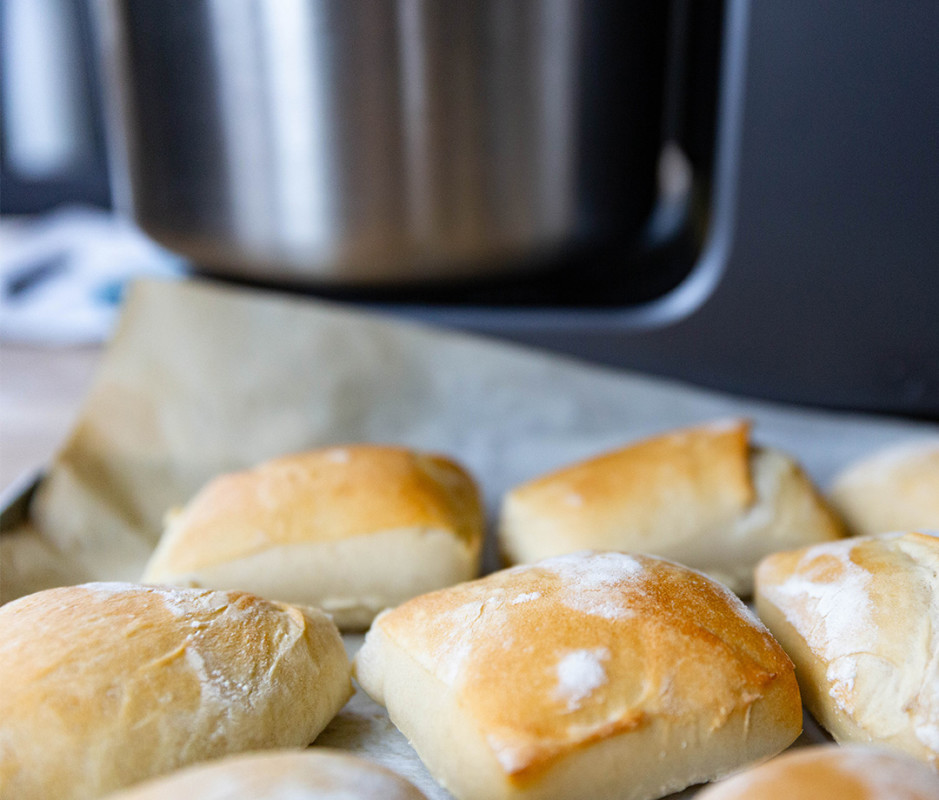
Dough is what it’s built to do and I wasn’t surprised that it performed admirably and I won’t waste too much ink other than to say it delivers on its primary promise. In addition to being able to make pizza dough in bulk, the Halo Pro lets me crank out legit ciabatta and hoagie rolls like it was born to do it. The removable breaker bar forces dough through a tighter space against the dough hook and quickly produces smooth, strong doughs.
Justin Park
I’m mostly mixing doughs when I pull out a mixer, but the Halo Pro has enough versatility for other common tasks that it’s kept my KitchenAid collecting dust in the pantry other than when I pulled it out to do side-by-side tests for this review. The paddle attachment comes out when I need to shred poached chicken or cream butter for cookies or whip up some homemade energy bars for backpacking. Whipping and whisking aren’t its strong suits and one reason why I haven’t offloaded the KitchenAid just yet. More on that below.
It is a bigger mixer, but the form factor is similar to my 7-Quart KitchenAid, with the Kitchen being taller while the Halo Pro a touch longer front to back. Both mixers fit easily on a countertop under normal height cabinets and both look great left out as permanent fixtures. If you want to store it away, the Halo Pro isn’t light at 33 pounds, but only a few pounds heavier than the 7-Quart KitchenAid.
The overhead light mounted on the underside of the tilting head was a surprisingly welcome feature. The warm light illuminating whatever I’m mixing was the add-on I didn’t know I wanted, especially for 11th-hour dough marathons.
Cons
One potential downside for small households can be the large size. Even with dough, if you only make really small batches (think one or two pizza dough balls), the large capacity can be a hindrance as it’s built to go bigger and tiny doughs can bounce around the larger bowl and take longer. This blind spot for small batches is even more of an issue with whipping and creaming tasks and more on that shortly.
While the touchscreen and dial controls work well, I found myself occasionally pining for the analog levers of my KitchenAid. Because the touchscreen is placed right above the release for moving the head of the mixer up or down, I often pressed buttons on the touchscreen without realizing it and then when I spun the dial it adjusted timer settings instead of setting my mixer to work and I had to revisit the touchscreen to get back on track. I found this a minor annoyance more than a dealbreaker.
Justin Park
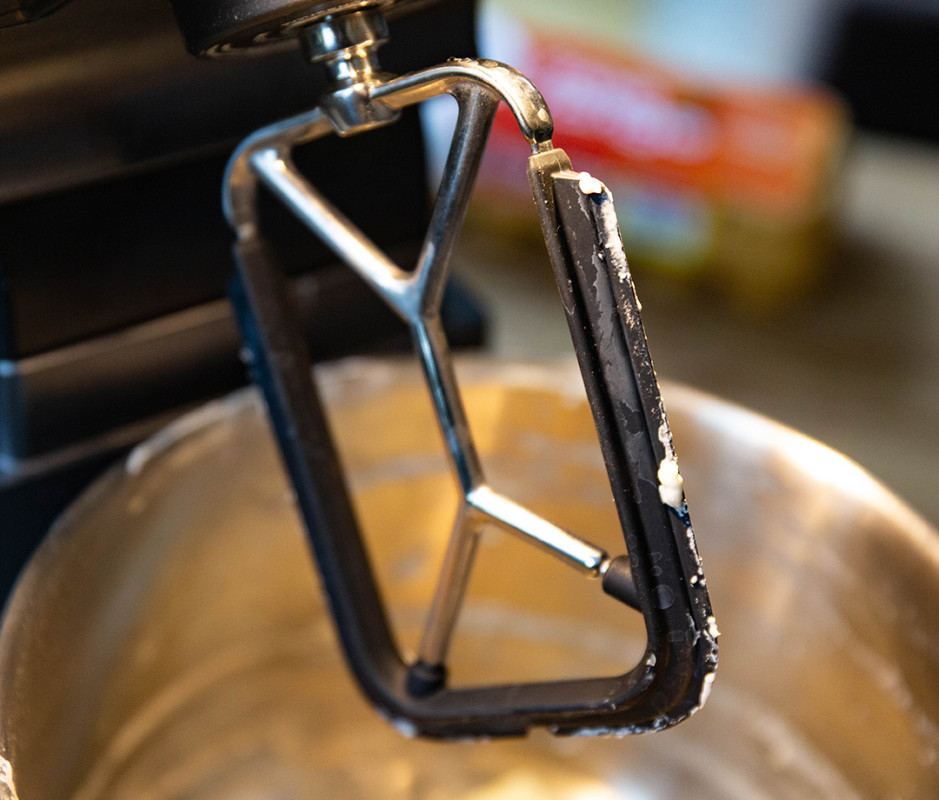
Compared to the KitchenAid, the Halo Pro doesn’t do as well with creaming butter and sugar together for cookies, for example. The silicone-coated paddle just isn’t as efficient and takes longer to get the same result while leaving a layer on the bottom of the bowl. As an infrequent baker of anything besides pizza and breads, this isn’t enough to steer me away but it’s something to consider if you’re looking for a true all-rounder.
The biggest miss with the Halo Pro is the whisk attachment. I tested it side-by-side with my 7-Quart KitchenAid and the differences in a basic whipped cream task were stark. After 2.5 minutes working through the 2-cup Homemade Whipped Cream recipe from Sally’s Baking Addiction, the KitchenAid was done, having produced fluffy, stiff peaks ready for fresh berries. After ten minutes, the Halo Pro had thickened the cream and sugar but it still wasn’t anything I’d call whipped cream. I think this is partly a manifestation of the Halo Pros weak point with small batches of anything, but it’s a miss nonetheless.
The whisking attachment on the Halo Pro is also just a fiddly attachment. It has two attachment points requiring you to slide it on and then screw another connection together. After whipping operations, the screwed-in point tightens up and is hard to grip to loosen. I’ve had to employ pliers to get the process going. It’s a piece of the appliance I hope Ooni can go back to the drawing board with if they work on a Version 2.0.
Final Verdict
For committed pizza makers and bread bakers, the Halo Pro Spiral Mixer is a must-have. It’s built to withstand the rigors of cranking out tough, elastic doughs and results in a better product plus there’s a five-year warranty if you register it through the Ooni app. Yes, the cost is higher than smaller planetary mixers that can get the job done, but it’s still cheaper than buying a new mixer every few years. And while I found some gripes with the other attachments, it has enough versatility to serve as an all-around stand mixer with some limitations many will readily accept for the dough-making advantages.
Justin Park
If you’re simply looking for a solid all-around mixer, a planetary mixer might do the trick, especially if you don’t make things in bulk too often. The Halo Pro’s shortcomings with small quantities mean it’s not the best for small households and the cost for infrequent use just doesn’t add up when you can get a capable KitchenAid or other brand on sale for a lot less.
Why You Should Trust Me
I’ve been making pizza at home for at least two decades and the first 15 of those years were spent evolving my process in a traditional electric oven and progressed into the many amazing home pizza ovens. The quality of my pies has increased exponentially to the point where I’m now hired to cater events through a pizza catering business with my buddy Summit Brunch. I’ve used stand mixers to prepare thousands of pizzas and feed my inner fat kid at home with breads, cookies, and cakes.