While it’s better to keep your hot tub open year round, there are cases where it may make sense to close it down for the winter. If you’re wintering elsewhere or simply don’t plan on using it during the winter, then it doesn’t make sense to keep it running through the season. Hot tubs can cost upwards of $100 a month or more in utility costs to run. If you do plan on shutting down your hot tub, prepping it for hibernation—like you might with your sprinkler system, outdoor faucets, and garage—is key. Without warm water constantly flowing through it, the hot tub’s pipes, jets, and pumps can freeze and crack when temperatures drop below freezing, leading to costly repair bills. Ahead we take you step-by-step through how to winterize a hot tub, so it survives the colder months unscathed.
Should You Winterize Your Hot Tub?
Shutting down your hot tub without properly winterizing it can lead to significant issues, according to Robert Schwachenwald, owner of Raleigh, NC-based Bizzy Bee Plumbing. “Frozen water in the plumbing can expand enough to crack PVC, warp pumps, destroy heaters, and blow out unions,” he says. “One freeze event can cause thousands of dollars in damage.” If you’re not planning to use or run the tub throughout the winter, you need to winterize it before shutting it down for the season.
Signs Your Hot Tub Wasn’t Properly Winterized
There are a few telltale signs that your hot tub has suffered freeze damage from not being properly winterized. These include a significant loss in water and puddles of water or ice patches around the hot tub. A closer inspection of the hot tub may reveal cracked pipes or pump housings.
When You Shouldn’t Winterize Your Hot Tub (Year-Round Use Considerations)
Many people enjoy using their hot tub in the cold winter months. If you plan on using it year round, then there’s no need to winterize it. If you plan on keeping your hot tub open year round, Schwachenwald advises following these guidelines:
- Maintain consistent water temperature
- Keep water circulating, especially on freezing nights
- Use freeze-protection or “auto-heat” mode
- Keep a high-quality insulated cover on at all times
- Check water levels weekly
Tools and Supplies You Need to Winterize Your Hot Tub
- Wet/dry vacuum
- Spa cleaner
- Line flush
- Filter cleaner
- Garden hose
- Towels
- Shop vac attachments
- Non-toxic antifreeze (for spas only)
- Submersible pump (if your tub doesn’t have a gravity drain)
Winterizing your spa is the perfect opportunity to give the shell and lines a good cleaning. Make sure to have the right cleaning products on hand for winter hot tub maintenance, including spa cleaner and line flush. A shop vac and towels can help you clean up spills. You’ll also need non-toxic antifreeze that’s designed specifically for spas and hot tubs.
Submersible Pump vs Gravity Drain
Winterizing a hot tub involves draining it. If your hot tub doesn’t have a gravity drain, you’ll need a submersible pump in order to do this.
Related: How to Winterize a Sprinkler System So Your Pipes Don’t Burst
How to Winterize a Hot Tub
Step 1: Clean the lines.
Before winterizing your hot tub, it’s a good idea to clean the lines. Add hot tub flush to the water, then run it for 15 to 30 minutes to flush the lines.
Step 2: Turn off power and disconnect electricity.
Shut off the breaker on your home’s electrical panel for your hot tub and in the hot tub’s subpanel, if you have one. If it’s not hardwired, unplug the hot tub from the outlet.
Step 3: Drain the hot tub completely.
Use either the gravity drain or a submersible pump to drain the hot tub. Don’t stop at this step! “People think draining the tub is enough,” says Schwachenwald. “It’s not. It’s the hidden water in the lines that destroys hot tubs every winter.”
Step 4: Remove and clean the filters.
Remove and clean the hot tub filters by rinsing them or soaking them in a filter cleaning solution. Allow to dry thoroughly before storing them.
Step 5: Use a shop vac to clear water from jets and plumbing lines.
Set the shop vac to blow, then run it while holding the hose against each jet opening to clear the lines. Switch the shop vac back to suck, and remove any water you blew out of the lines.
Step 6: Clean and dry the shell thoroughly.
Clean the hot tub shell with a specialized hot tub cleaner, then dry it thoroughly with towels.
Step 7: Open and drain pump unions, manifolds, and heater unions.
Loosen the unions on the hot tub at the pump and the heater to allow any residual water to completely drain out. Next, remove the hot tub’s access panel and detach the hoses from the manifold to drain it.
Step 8: Add spa-safe antifreeze (when appropriate).
Use a funnel to add a spa safe anti-freeze into each individual jet opening and port. The goal is to get antifreeze throughout the plumbing in the hot tub to prevent any freezing during the winter. A typical hot tub will hold a couple of gallons of anti-freeze.
Step 9: Clean and store the cover.
Clean the hot tub cover then secure it tightly over the hot tub. Protect the cover from ice and snow by covering it with a tarp or a waterproof hot tub cover cap.
Related: A Plumber Explains How to Winterize Outdoor Faucets to Prevent Burst Pipes
How to Protect Your Hot Tub in Harsh Winters
Insulation Tips for Cabinet and Equipment Bay
Insulating the cabinet and equipment bay adds an extra level of hot tub freeze protection. You can cut pieces of rigid foam board or expand spray foam to insulate the space. When insulating, make sure not to block any areas that need to be ventilated. Schwachenwald also suggests building a wind break around the hot tub. “Wind is actually harder on a hot tub than snow—the cold air steals heat faster than most people realize,” he says.
Why You Should Never Rely Solely on the Cover
A hot tub cover is designed to help maintain the temperature of the water. It does not prevent hot tub pipes from freezing.
Preventing Freeze Damage During Power Outages
If you lose power in the winter and your hot tub is still in service, cover the hot tub with the lid and insulate the equipment bay with towels. You can also use a portable space heater to keep the bay warm during longer outages.
Opening Your Hot Tub Again in Spring
Clearing antifreeze: Partially fill your hot tub with water, then run the pumps to flush the antifreeze out of the pipes. Drain the hot tub then repeat this process several more times to completely drain the antifreeze.
Reinstalling filters and restarting the system: Thoroughly clean the hot tub shell then reinstall the filters before turning the hot tub back on.
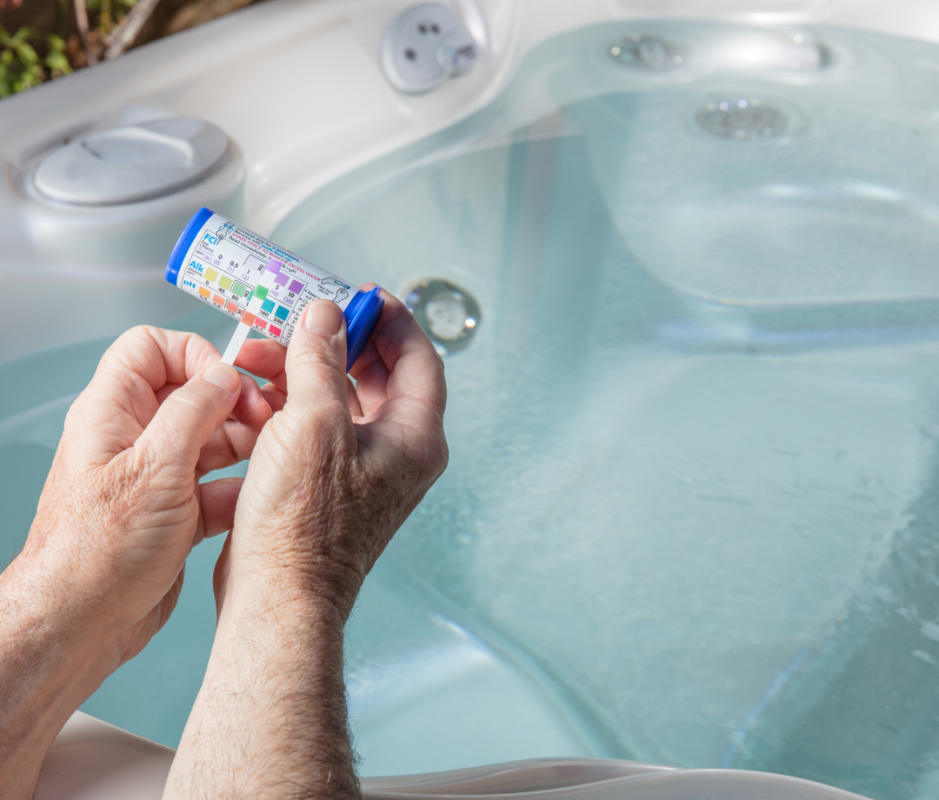
Water balancing and first-use checks: Use a hot tub test kit to check the water’s pH, alkalinity, and calcium levels and add the necessary chemicals to to balance them.
Getty Images
Common Mistakes to Avoid When Winterizing a Hot Tub
Leaving water behind in jets or plumbing: Failing to blow out a hot tub properly can leave weather in the plumbing or jets, which can later freeze and cause damage.
Skipping line blow out: Schwachenwald says the majority of freeze damage he sees occurs because homeowners don’t blow out the lines, which leaves water trapped in pumps and heaters.
Using automotive antifreeze: Never use automotive antifreeze in a hot tub. This type of antifreeze contains ethylene glycol, which is very toxic. Use a non-toxic antifreeze designed specifically for hot tubs and spas.
Not shutting off power correctly: Winterizing a hot tub with its power still connected is extremely dangerous. Make sure to shut the hot tub off at the breaker to eliminate the risk of electrical shock.
Related: The Ultimate Home Maintenance Checklist: Essential Tasks You Should Do Each Season
Troubleshooting Issues When Winterizing a Hot Tub
What to do if water keeps seeping from jets: The best way to remove any residual water from the lines is to use a shop vac to blow out the lines. Set your shop vac to blower, then hold it against the various ports and jets until water stops seeping out.
How to handle partial freezing: If your hot tub is partially frozen, unplug it, then thaw the equipment by placing a space heater or heat lamps in the equipment bay. If a layer of ice has formed over the water in the hot tub, carefully crack it and add hot water to help the thawing process. Once thawed, inspect all parts for freeze damage.
When to call a spa technician: If you discover any freeze damage such as cracked pipes or leaks in your hot tub, then it’s time to call in a spa technician to repair it.
FAQs About Winterizing a Hot Tub
Can you winterize an inflatable hot tub?
You have two options when winterizing an inflatable hot tub. You can either deflate it, dry it, fold it, and store it in a climate-controlled space until spring, or you can leave it open and running through the winter. If you decide to keep it operational, you’ll need to keep the heater on and use a cover to help maintain the water temperature.
When should you winterize your hot tub?
Winterize your hot tub before the first hard frost. This can vary depending on where you live. For colder regions, winterize your hot tub between late October and early November. You can wait until late November if you live in a more temperate climate with mild winters.
Related: DIY Ice Melt: How to Make Homemade De-Icer Spray for Walkways and Windshields
Is it better to run the hot tub through winter instead of winterizing it?
Keeping your hot tub running year round is a better option than emptying and winterizing it. Keeping the warm water circulating through the pipes eliminates any chance of cracked pipes or parts. You can also save money on heating the water by setting it to a lower temperature and using an insulated cover while it’s not in use.
Do hot tubs always need antifreeze?
If you live in a climate with mild winters, it may not be necessary to add antifreeze when winterizing a hot tub. Blowing out the hot tub lines to remove any moisture will suffice.