Fall foliage is great, until the leaves in your own yard start turning brown and falling, and it’s time for a fall clean-up. While the typical process involves raking, blowing, and bagging up your leaves, there’s one approach that can help you save time and money and give you the gift of free mulch. That’s—you guessed it—mulching your leaves. Mulching leaves is the most eco-friendly way to handle leaf waste, and—much like you can use grass clippings as a natural fertilizer—you can use the mulch for your lawn, garden beds, trees, and more.
In this piece, you’ll learn all the ins and outs of mulching leaves, tips for doing it yourself, and pointers on the best way to shred your leaves for mulch.
Why Should You Mulch Leaves Instead of Raking and Bagging?
Mulching leaves on your lawn is faster and more efficient and offers more benefits for your yard than raking. It reduces yard waste, time spent raking, and the number of bags you need. Sure, raking is a good workout, but it also takes a long time. Here are even more benefits to consider.
Environmental and soil-health benefits of using fallen leaves as mulch
Using fallen leaves as mulch is a very environmentally friendly practice and also a great source of nutrients for your soil.
Brian Feldman, Senior Director of Technical Operations and Agronomy at TruGreen, explains that “mulching leaves is one of the easiest and most sustainable ways to return nutrients to your lawn.”
“Mulched leaves feed your soil, improve [your lawn’s] structure, and support healthy grass growth,” he adds.
Michael Clarke, landscape architect, horticulturalist, and founder at Yardwork, agrees. “Shredded leaves break down into organic matter and contribute nitrogen, potassium, and other micronutrients, helping to retain moisture, allow for better drainage, and healthier microbial activity,” says Clarke.
Environmental benefits
- Reduces the amount of plastic bags needed to dispose of leaves
- Minimizes gas used for leaf blowers and yard waste truck collectors
- Lowers the amount of fumes in the air
- Contributes to the well-being of microorganisms
Soil health benefits
- Enhances the quality of the lawn soil and grass
- Provides rich nutrients to help roots grow deeper
- Improves water absorption and minimizes the use of fertilizers
- Suppresses weed growing
Related: With These Simple Tweaks, You Can Stop Moss From Killing Your Grass in Shady Areas
How Mulching Compares to Traditional Leaf Removal
The standard practice for disposing of fallen leaves is to blow them, rake them, and bag them in plastic or paper bags. Then you need to place them to the side of the curb for the town to pick up on your yard waste day. That’s a lot of muscle power and time spent.
The other option is to pay a landscaping company to do the heavy work, which can get expensive. However, if you opt to mulch the leaves, you eliminate the need to bag and dispose of them; instead, they decompose directly in your lawn soil, making it healthier and the grass roots stronger. Feldman states, “When mowed properly, leaves and grass clippings add nutrients to the lawn, improve the soil, and save time, money, and the environment.”
Common Misconceptions About Leaf Accumulation and Lawn Health
There are many misconceptions about leaf accumulation. Although it is a natural cycle, it is important to understand what happens when there’s leaf accumulation and how it affects the lawn’s health.
- Myth 1: Leaves decompose naturally and it is okay to leave them. Although this is true, a big pile of leaves on your lawn can suffocate your grass, preventing it from getting the oxygen and sunlight it needs to stay healthy. Unless you have a dirt patch with no grass, you’ll want to mulch or clean as many leaves as you can. Clarke recommends “mowing grass areas regularly during leaf-drop season to prevent thick layers of leaves from building up and clogging your mower or creating opportunities for disease in your grass.”
- Myth 2: Fallen leaves insulate the grass. Grass can withstand the cold and survive temperature changes. However, leaving a thick layer of leaves will limit the grass’s access to essential nutrients. Plus, big piles of leaves offer an opportunity for moisture to accumulate, creating the perfect environment for mold and mildew.
Related: Don’t Skip This Crucial Lawn Care Step Before First Frost
What Happens When You Mulch Leaves: The Science Behind It
When you mulch leaves, you accelerate the decomposition process that happens when leaves convert into soil over time, much faster than if you were to leave a giant pile of un-shredded leaves. The smaller pieces of leaves will become soil faster and help make your grass healthier.
Decomposition process: carbon-to-nitrogen (C:N) ratio in leaves and how it affects breakdown
Fallen leaves, by nature, decompose slowly and form part of the food chain for organisms in the soil, such as worms, bacteria, fungi, and insects, which help break the leaves down and release nutrients back into the soil.
That said, the carbon-to-nitrogen ratio is what really affects the composting process. Nitrogen accelerates the decomposing process. For instance, oak leaves are high in carbon but low in nitrogen levels, with a 60:1 ratio. The ideal ratio is 30:1, which will speed up the composting process and can be achieved by mixing oak leaves with grass clippings or manure, both of which are high in nitrogen. To put it in simple words, brown leaves, regardless of tree type, have high levels of carbon, and green leaves are high in nitrogen. Use green leaves to create the optimal composting environment for mulching in garden beds.
Getty Images
Impact on soil structure, organic matter, moisture retention, and worm/microbe activity
Allowing leaves to decompose offers many benefits to the soil and the organisms that live in it. The environmental benefits of leaf mulch are some of the top reasons why mulching is the way to go when handling fall leaves.
Soil structure: Composted leaves blend into the soil, increasing organic matter levels and improving soil health.
Organic matter: Leaves are naturally organic, which enhances and provides food for your soil, earthworms, and other soil microorganisms.
Moisture retention: This is one of the many benefits that mulched leaves provide, leading to healthier grass roots and drainage.
Worm activity: Earth warms, insects, bacteria, and fungi benefit from decomposing leaves and naturally release rich nutrients back into the soil.
Related: How to Mulch Leaves With Your Lawnmower to Cut Down on Raking
Potential Risks and How to Avoid Them
There are some drawbacks to mulching leaves that could damage your grass and even kill it. That’s why it is essential to know how to mulch your leaves and spread them properly to avoid matting, smothering your grass, and nutrient tie-up. The key is grass exposure. Clarke notes that “You can leave the shredded leaves on the grass as long as you can still see the grass blades through them, which ensures they decompose properly.”
Leaving excess or large piles of leaves on your lawn will create a compact barrier that blocks the grass from getting enough oxygen and sunlight, which are essential for keeping your lawn healthy even in winter.
Best Practices for Mulching Leaves: Step-by-Step Guide
Mulching leaves isn’t complicated, but it is important to understand the steps you need to take to ensure proper distribution and placement, as well as which tools to use. Here we detail exactly what you need to know about how to mulch leaves in fall.
When is the best time to mulch leaves?
Feldman emphasizes that “fall and early winter lawn care is more than a seasonal chore. It’s the perfect opportunity to protect and prepare your lawn for the cold months ahead.” Although fall starts in the third week of September, you won’t need to mulch your leaves until you have a good amount of fallen leaves, usually around the second or third week of October, depending on where you live. Then set your lawn mower to mulching mode and start the process.
The ideal conditions are when the leaves look brown and are dry, which makes clipping easier. Avoid mulching the leaves when they are wet. Wet leaves will clog your mower and prolong the process.
Related: Scarifying Vs Dethatching Vs Aerating: What’s the Best Way to Prep Your Lawn for Winter?
Equipment and settings
Mulching your leaves is a straightforward process, and you don’t necessarily need any additional equipment, other than your existing lawnmower and a rake.
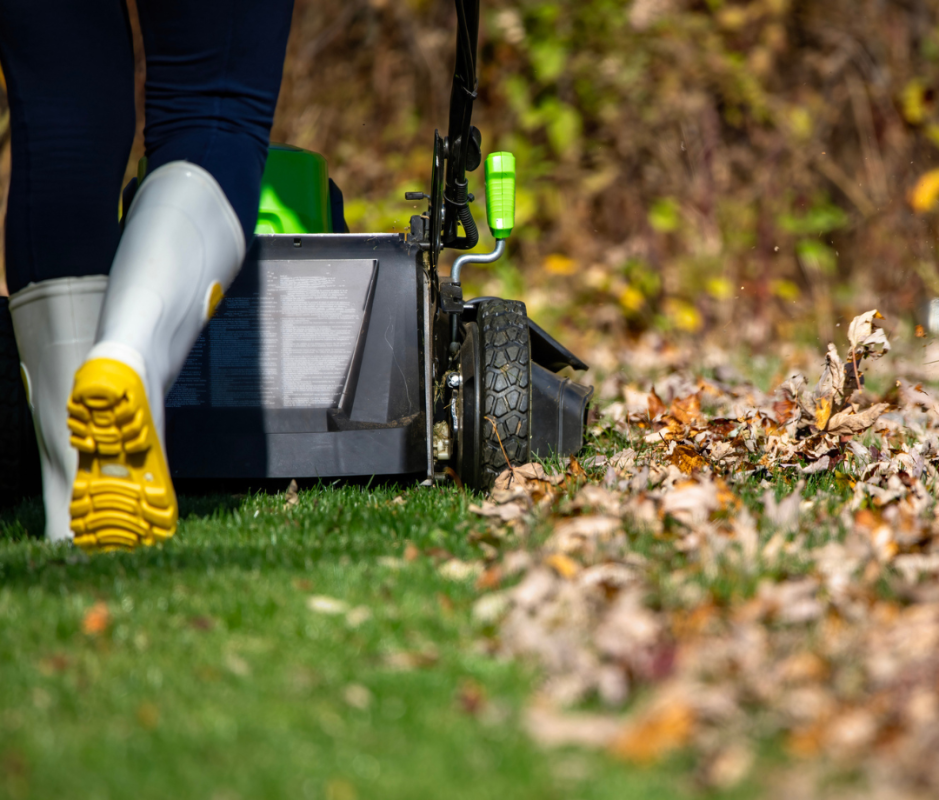
Lawnmower: All you need to do in some cases is set your lawnmower to “mulching mode”, but otherwise, you just mow the leaves as you cut your grass. The difference is that in some cases, you may need to go over the grass a few times to properly break down the leaves.
Blade type: Special mulching blades for your lawnmower speed up leaf mulching. However, if you don’t want to change your mower blade, the standard grass blade will work just fine, too. Just sharpen it thoroughly, and you’ll be set.
Mowing height: Before you get started, set your lawnmower to the highest level. This will allow the mower deck to more easily absorb and shred the leaves.
Before you start mowing, ensure the leaves are evenly spread out, especially if you have piles. Doing this will make it easier to mow the leaves without clogging your mower.
Frequently Asked Questions
Can I just leave the leaves on my lawn and not mulch them?
If you have a bare area where you don’t have any grass, you can just leave the leaves without mulching them. However, if you have grass in your yard, you’ll want to mulch the leaves or at least spread them out. A pile of leaves can suffocate your grass, leading to dead spots.
Does leaf mulch add enough nutrients to your lawn to replace fertilizer?
Mulched leaves provide rich nutrients, help with water retention, and suppress weeds in your lawn. To ensure your lawn has the necessary nutrients, a soil test is recommended.
Will mulching leaves damage my lawn or garden plants?
Mulching the leaves into fine pieces is actually beneficial for your grass and garden plants. You need to make sure you don’t saturate the grass with too many leaves, as this can create a thick layer that prevents oxygen and sunlight from reaching the ground. Using leaves as garden mulch can provide key nutrients to your plants; just ensure you place them around the base of the plants, leaving a little space at the trunk.
Related: Is Thatch Choking Your Lawn? Here’s How to Fix Spongy, Patchy Grass—Fast
How long does leaf mulch take to break down?
The leaf mulch will start to decompose in a week, but it can take several months to decompose fully. Larger piles of mulched leaves will take longer to decompose—anywhere from several months to a year.
What if I have a thick layer of leaves already on the lawn when I get to them?
That’s okay. Use a rake to spread them out into a thin layer so you can mow them easily. Ensure your mower blade is sharpened and ready to go.