From Trinidad and Jamaica to Fiji, the selection of rum bottles at your local liquor store come from distilleries around the Caribbean and far beyond. But it’s a safe bet that many of those same bottles share one thing in common: They were all imported from Amsterdam.
E&A Scheer is a rum trader that’s been around since before America was America. It was founded in Amsterdam in the 1760s by the brothers Evert and Anthonie Scheer, who imported and exported anything and everything at a time when Holland could still plausibly claim to be the merchant to the world. The brothers imported sugar and coffee from the West Indies and Africa, and timber from Sweden. They sent wine, genever, and brandy to St. Maarten, New York, and Germany.
In the 19th century, the firm, under the same name but with new owners, began to specialize in liquor, particularly rum. It developed a robust trade in arrack, a rum-like spirit distilled in the East Indies, which it shipped home to Europe in large quantities, using otherwise empty homebound supply ships. The alcohol would then be auctioned to Dutch dealers, who bottled and sold it. The firm started importing rum from Jamaica and expanded to other rum-producing countries. By the end of the century, Scheer was advertising itself simply as “Dealers in Arrack and Rum.”
Related: The $245 Trademark That Revived Michter’s Into One of America’s Greatest Whiskey Brands
That claim still applies. E&A Scheer has persisted, perhaps improbably, where others have faded. Today, it’s one of the world’s major rum import and export firms. (The company has acquired other rum importers along the way, notably Main Rum Company of Liverpool in 2001). Every year, the firm sends out into the world the equivalent of 35 million bottles of rum, which find its way into everything from adult fizzy drinks to heavily embossed bottles of pricey sipping rums. (A lesser amount of what it handles goes into candies and even perfumes.)
If an American entrepreneur gets the notion to get into the rum business—but would just as soon avoid the great expense and considerable bother of building and managing a distillery—a call to Amsterdam is usually the first order of business. The entrepreneur can explain what flavor profile they’re seeking for their product and what marketing story they want to tell.
“And they’ve all got stories,” says Niels Benschop, E&A Scheer’s chief commercial officer, of the clients they work with. “That’s the fun thing and they can create their own liquid that matches their story here.”
The Heart of E&A Scheer
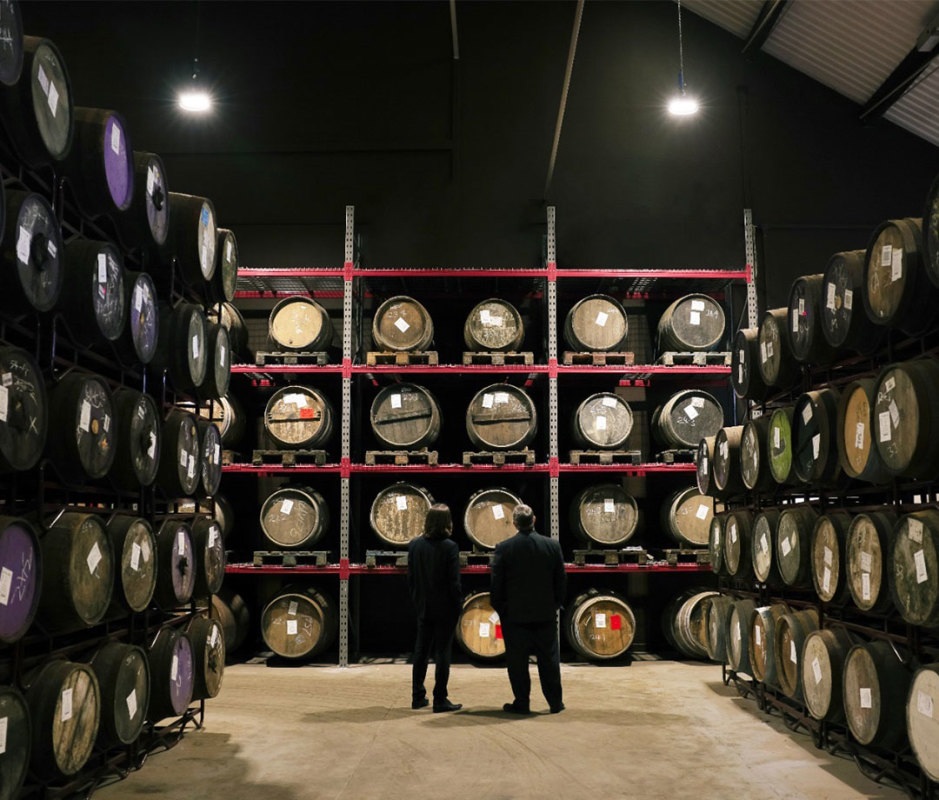
The “here” is a modern warehouse close to Amsterdam’s industrial harbor, about a half-hour Uber ride from the quaint canals of the tourist center. The heart of the complex is a vast warehouse, filled with gleaming steel tanks holding up to 60,000 liters, as well as some ancient wooden Cognac and wine fermentation tanks that are now used for storing rum.
On a recent visit, Benschop led me through the warehouse, while pointing out the tanks holding rums from around the world as if they’re old friends — rums from El Salvador, Martinique, Liberia, Barbados, Paraguay, the Philippines, three distilleries in Australia, and Santa Teresa in Venezuela, which is one of their largest suppliers.
Courtesy E&A Scheer
“Here’s Thai-B “ he says, which is a mix of rums from four to 20 years old. “We might use that if someone wants the story to be about Asia-Pacific rum.” Down another aisle, “here’s rum from Spain — we bought it and we’ll see if we can build some new stories.”
Scheer also has warehouses in Antwerp and Liverpool, where some of the rum is resting in what it calls “small wood” — neutral casks and barrels. In total, it has about eight million liters of rum in storage at any given time.
Some of its larger tanks contain a “base blend” — one is a mix of three to five Caribbean rums, which can then be enhanced with other high-ester rums; another is labeled “Caribbean light rum,” which is predominantly from the Dominican Republic.
“This is our ester aisle,” Benschop says, referring to rum high in congeners, an element that can give rum a noticeably funky aroma. “A ‘B’ on a tank means it’s the Wederburn blend from Jamaica. Gold-V is from Venezuela. And here’s the LROK tank from Hampden Estates. And this is pot still rum from Barbados.”
Creating a New Rum Blend
The rum creation process starts when a client contacts Scheer to request rum samples. They may describe the taste profile they’re seeking, or request rums of a certain age or provenance. It might be a story they want to tell — about African sugar cane, or of the trans-Pacific trade.
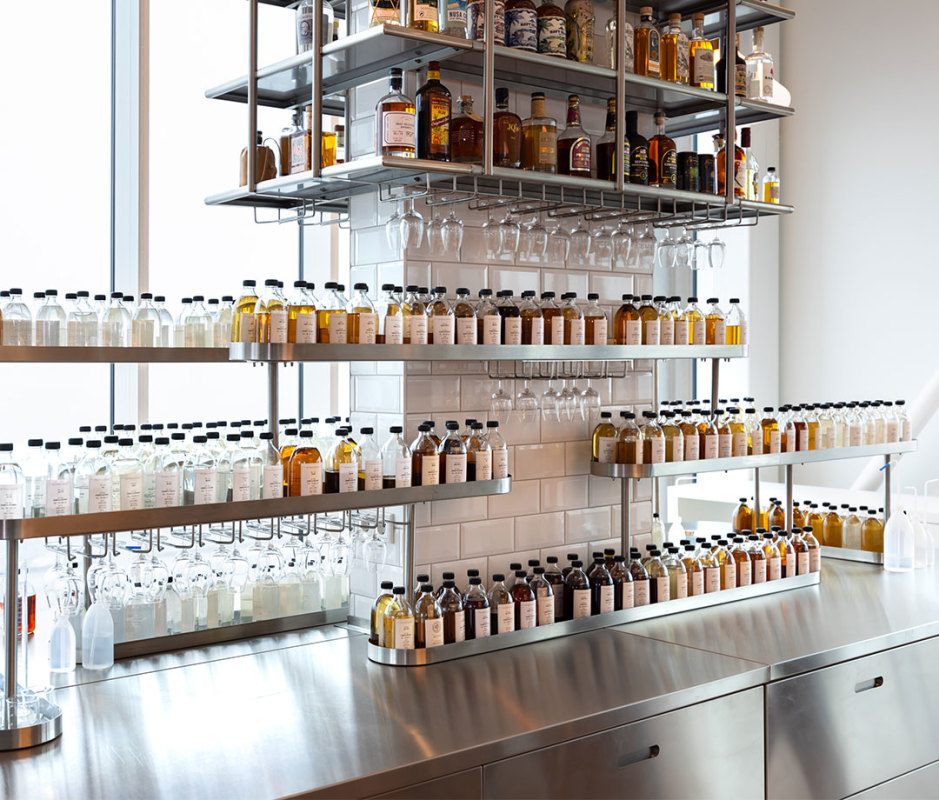
The technicians at Scheer then get to work, often starting with a relatively neutral base blend, and then adding higher-ester rums to create depth and nuance. They’ll concoct a few samples and ship them to clients in 100ml bottles. The client may come back and ask to refine this further. Scheer is happy to oblige. The firm has on file recipes for 47,000 blends it has created over the years.
Once the client selects a blend that they like, then production begins. The exact blend of rums is sent down to the warehouse. The recipe is visible on a form in a clear plastic envelope, and the warehouse crew gets to work.
The day I visited the team was fulfilling an order for a British rum importer, building a blend that called for three Caribbean rums. The man in charge communicated via walkie talkie to another worker, who hooked up blue hoses to various tanks. Valves opened and rum flowed, passing through a meter that tracked exactly how many liters were released.
The minimum order for E&A Scheer is typically 1,000 liters, although the day I visited a tanker truck holding 30,000 liters was filling up for delivery to a customer that orders several tanker trucks of rum each year. A 100ml file sample of every recent blend is kept in a storage room for five years before being discarded.
Courtesy E&A Scheer
The upstairs blending room is modern, bright and has a long bar and a sizable center island under a towering, chimney-like column of rums from the world over. Tall windows look out on Brancusi-like windmills and the distant cranes of the shipping port.
This room is where brands of rum from around the world are created, based on sometimes vague directives from aspiring rum entrepreneurs. Scheer has gotten requests like “I need Bacardi but better.” The company has also found there is no universal language for describing rum. A Japanese importer once asked for a sample to be “heavier,” so the firm added heavier bodied rum to the blend. But it turns out that what the customer actually meant was that they wanted the rum to be a few shades darker.
Benschop showed me a method they devised to educate clients on the rum blending process. Five rum samples are arrayed on a chart, with ester content on the left axis and age on the right. They first sample a neutral rum at the chart’s apex, then add a few drops of high-ester rum, which vastly changes the character of the rum. Then they add a bit of aged rum, which changes it further.
“That’s how we demonstrate what we do,” Benschop says. “We find the rum to match the story.”