A good road trip now is part engine, part apps, and part survival kit. When the signal drops and the kids are bored and the weather turns, you find out fast whether your car is just transport or a rolling basecamp that keeps everyone calm, connected, and on course. Let’s build the second one.
Build Your Offline-First Map Stack
Start with navigation. Don’t rely on a single app and a cell signal that disappears the moment you hit mountains or desert. AAA’s own long-distance travel guides still push old-school planning—plotting your route, checking fuel stops, and sticking to safe corridors—because getting lost in the wrong place can turn into an actual problem, not an anecdote.
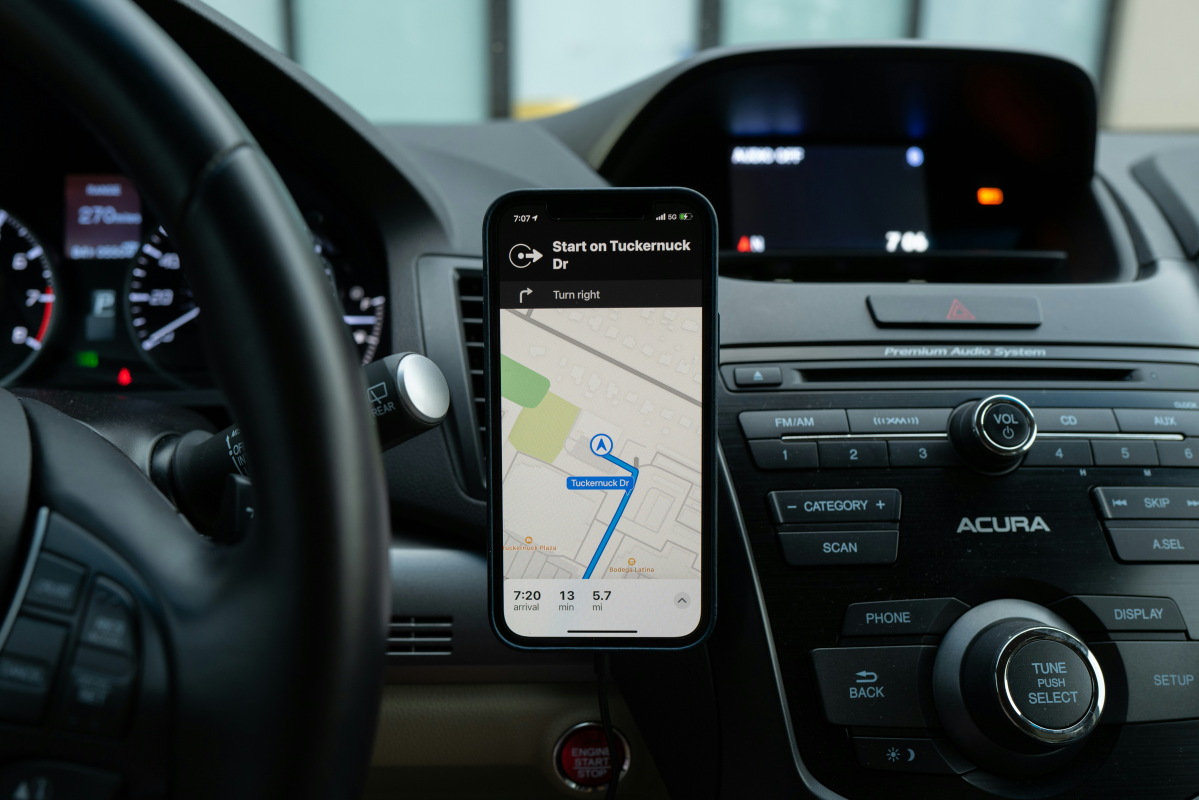
Do an “offline audit” before you leave. Download areas in Google Maps or Maps.me so your primary phone can guide you even with zero bars, then add a dedicated trail app like Gaia GPS for hikes, forest roads, and national-park side missions. Gaia is built for leaving coverage behind: it stores topo maps, lets you draw routes, and tracks you via GPS even in airplane mode.
If you’re chasing dirt or snow, layer in an off-road-specific planner such as onX Offroad. It overlays legal trails, land-ownership boundaries, and difficulty ratings, and crucially saves all that data for offline use so you’re not guessing whether a trail is open when you’re already nose-deep in ruts.
Now bolt on comms. A compact satellite messenger turns dead zones into “slow zones”—you still can’t scroll, but you can send SOS and basic texts if things really go sideways. AAA’s remote-travel safety tips explicitly call out pairing route planning with emergency gear in rural areas for exactly this reason.
Inside the cabin, keep it simple. One high-output charger per row, a shared power bank, and a tablet or phone mount for whoever’s doing co-pilot duty is enough. Pre-download playlists and podcasts over Wi-Fi, and assign roles: one person drives, one person navigates, one person runs music and snacks.
My Verdict
A “connected” road trip isn’t about stuffing the car with screens; it’s about making sure nothing important breaks when the signal does. Set up an offline map stack, add a basic satellite messenger, and give every seat a charging plan. Do that once and your car stops being just a way to get there—and becomes the calm, competent travel hub that lets you push farther with fewer surprises.